
Designing Futures Literacy Through Play
Designing Futures Literacy Through Play
Knowing about the climate crisis doesn't prepare you to act on it. The gap isn't information — it's the absence of practice at thinking across time.
Knowing about the climate crisis doesn't prepare you to act on it. The gap isn't information — it's the absence of practice at thinking across time.
CONTEXT
CONTEXT
Business school students are being asked to lead in a world where 85% of SDG targets are stagnating or reversing, and where the problems they'll inherit don't fit the decision-making frameworks they're being taught.
The challenge wasn't awareness — MBA and MBI students knew the facts. It was futures literacy: the capacity to imagine, inhabit, and design across uncertain timescales, and to do it collaboratively with people who think differently than you do.
How might we help MBA/MBI students imagine futures and build new worlds where innovators work together to solve our most pressing problems?
Business school students are being asked to lead in a world where 85% of SDG targets are stagnating or reversing, and where the problems they'll inherit don't fit the decision-making frameworks they're being taught.
The challenge wasn't awareness — MBA and MBI students knew the facts. It was futures literacy: the capacity to imagine, inhabit, and design across uncertain timescales, and to do it collaboratively with people who think differently than you do.
How might we help MBA/MBI students imagine futures and build new worlds where innovators work together to solve our most pressing problems?
MY ROLE
MY ROLE
Game designer and experience architect
Game designer and experience architect
Responsible for translating the UN SDGs and PRME framework into a scenario-based, role-playing game system built for MBA/MBI classroom use, including game mechanics, character architecture, scenario card design, and facilitation structure.
Responsible for translating the UN SDGs and PRME framework into a scenario-based, role-playing game system built for MBA/MBI classroom use, including game mechanics, character architecture, scenario card design, and facilitation structure.
In collaboration with 6 other team members
In collaboration with 6 other team members
APPROACH
APPROACH
Game prototype design grounded in the Ten Faces of Innovation
Game prototype design grounded in the Ten Faces of Innovation
Scenario cards anchored in real SDG contexts and projected 2045 futures to create stakes that felt consequential, not hypothetical.
Scenario cards anchored in real SDG contexts and projected 2045 futures to create stakes that felt consequential, not hypothetical.
Playtesting with participants from SCAD and Emory university communities, observing team dynamics and using post-game storytelling to surface what players actually internalized versus what they performed.
Playtesting with participants from SCAD and Emory university communities, observing team dynamics and using post-game storytelling to surface what players actually internalized versus what they performed.
THE SYSTEM ARTIFACTS
THE SYSTEM ARTIFACTS
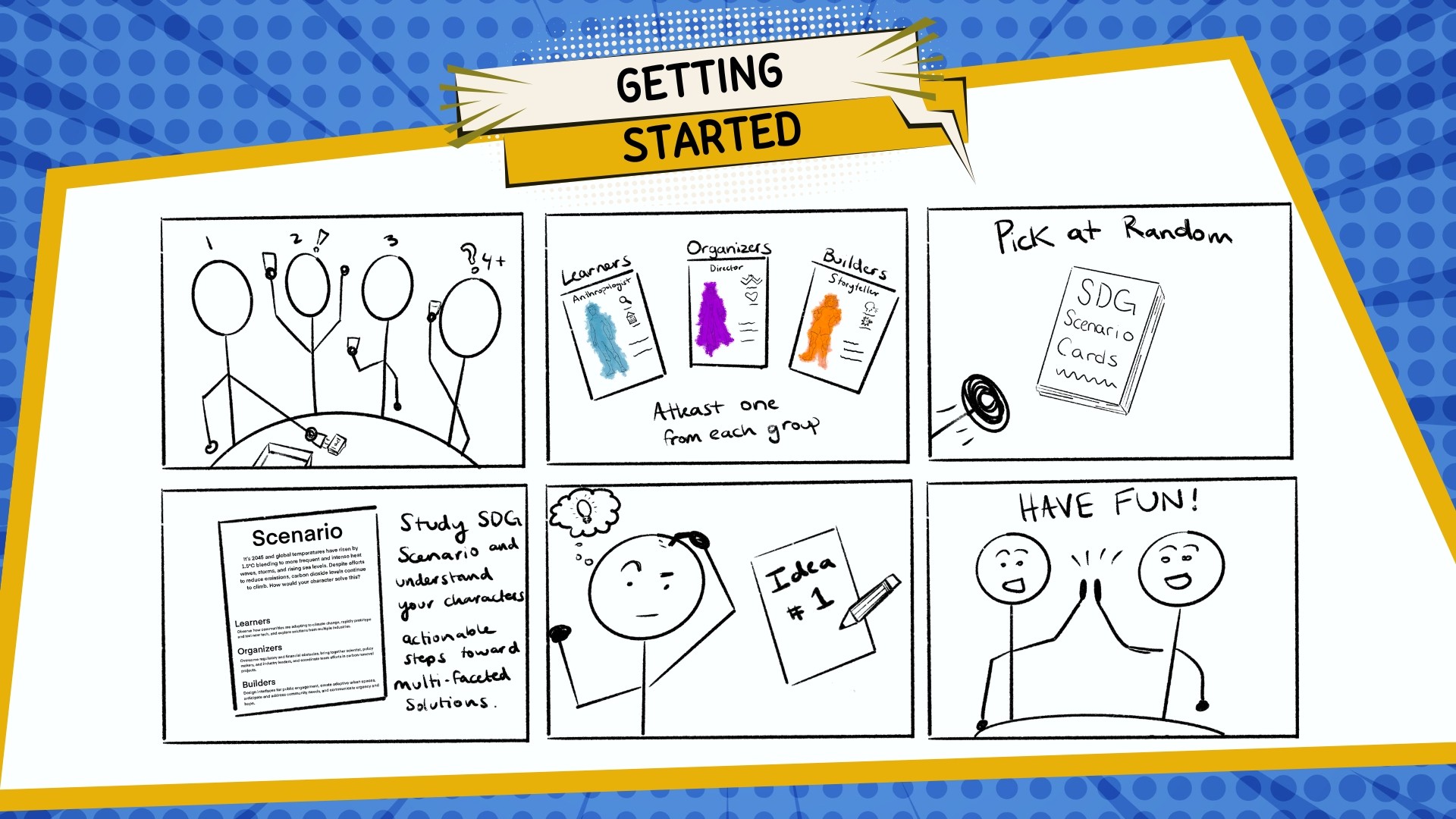
Six-step game mechanics — from team assembly to ideation, designed for groups of 4–10 BY CJ
Six-step game mechanics — from team assembly to ideation, designed for groups of 4–10 BY CJ
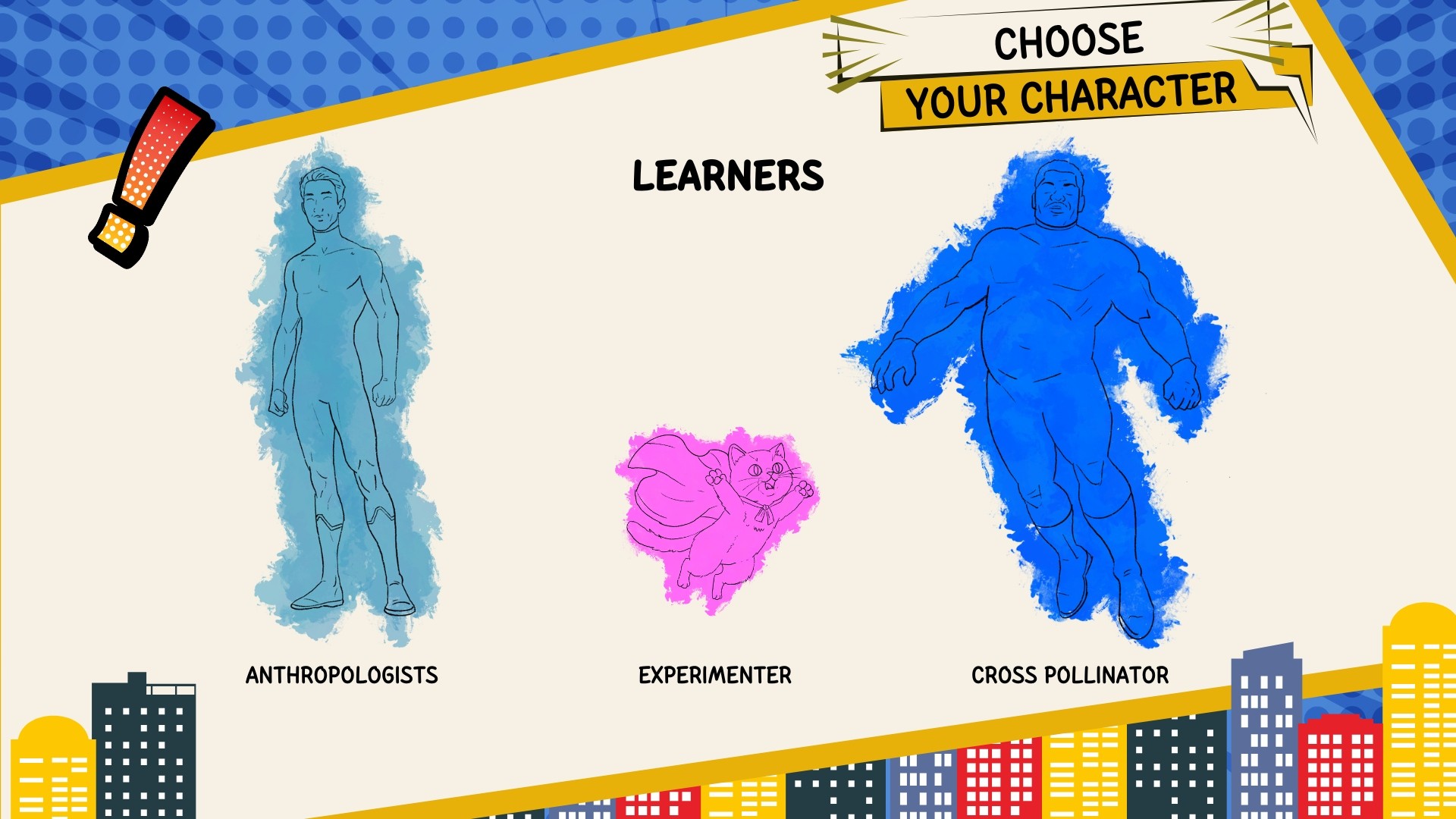
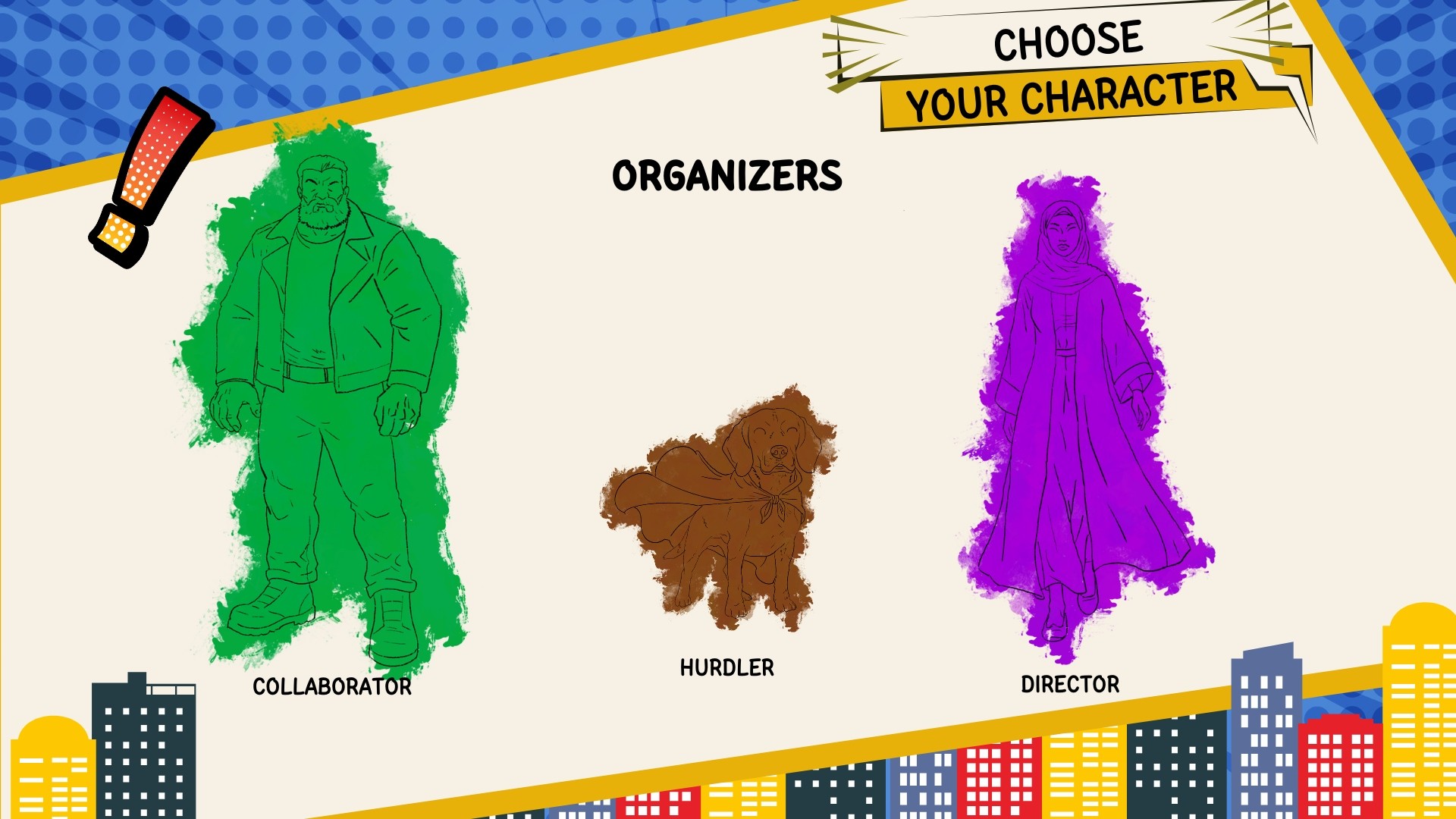
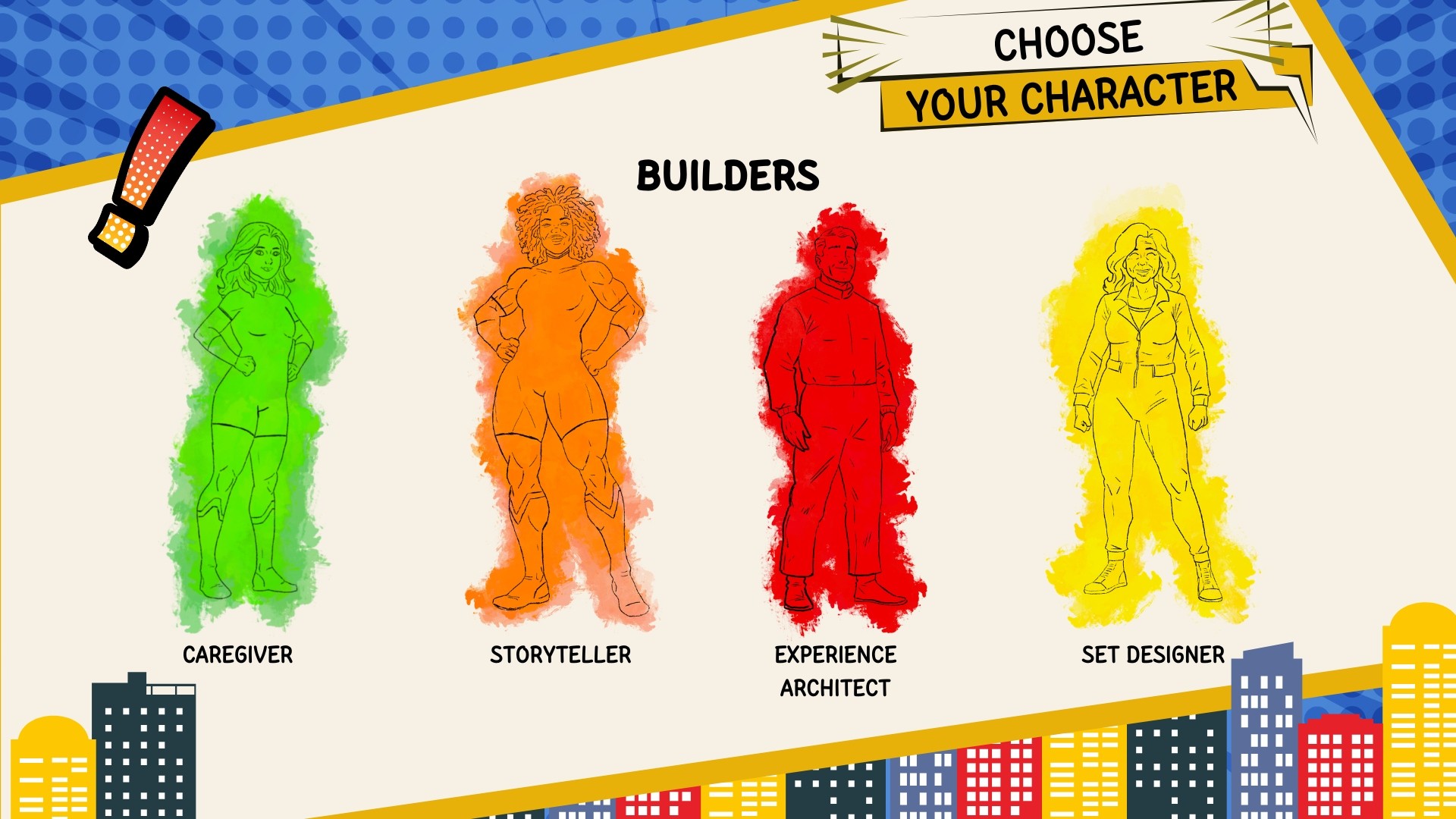
The character sheets- Visually communicates the Ten Faces of Innovation framework and the role-based architecture by CJ
The character sheets- Visually communicates the Ten Faces of Innovation framework and the role-based architecture by CJ
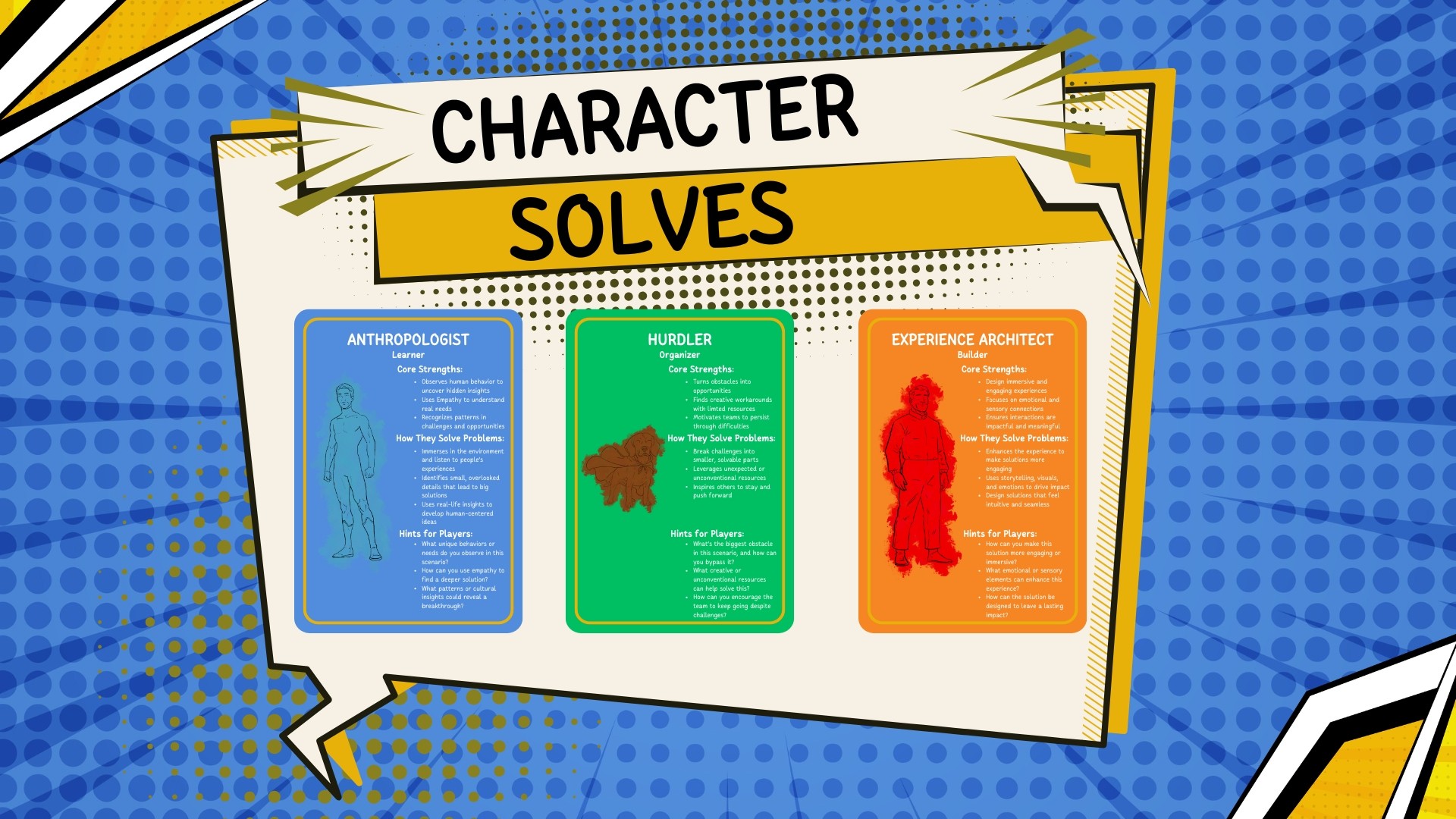
Cognitive role architecture — each character type brings a distinct problem-solving lens to the same scenario by Bryan
Cognitive role architecture — each character type brings a distinct problem-solving lens to the same scenario by Bryan
IN PLAY
IN PLAY
Teams assume distinct innovation roles — Anthropologist, Hurdler, Experience Architect — and work against a timed scenario drawn from real SDG futures.
The constraint isn't the problem. It's being forced to solve it as someone who thinks differently than you.
Teams assume distinct innovation roles — Anthropologist, Hurdler, Experience Architect — and work against a timed scenario drawn from real SDG futures.
The constraint isn't the problem. It's being forced to solve it as someone who thinks differently than you.
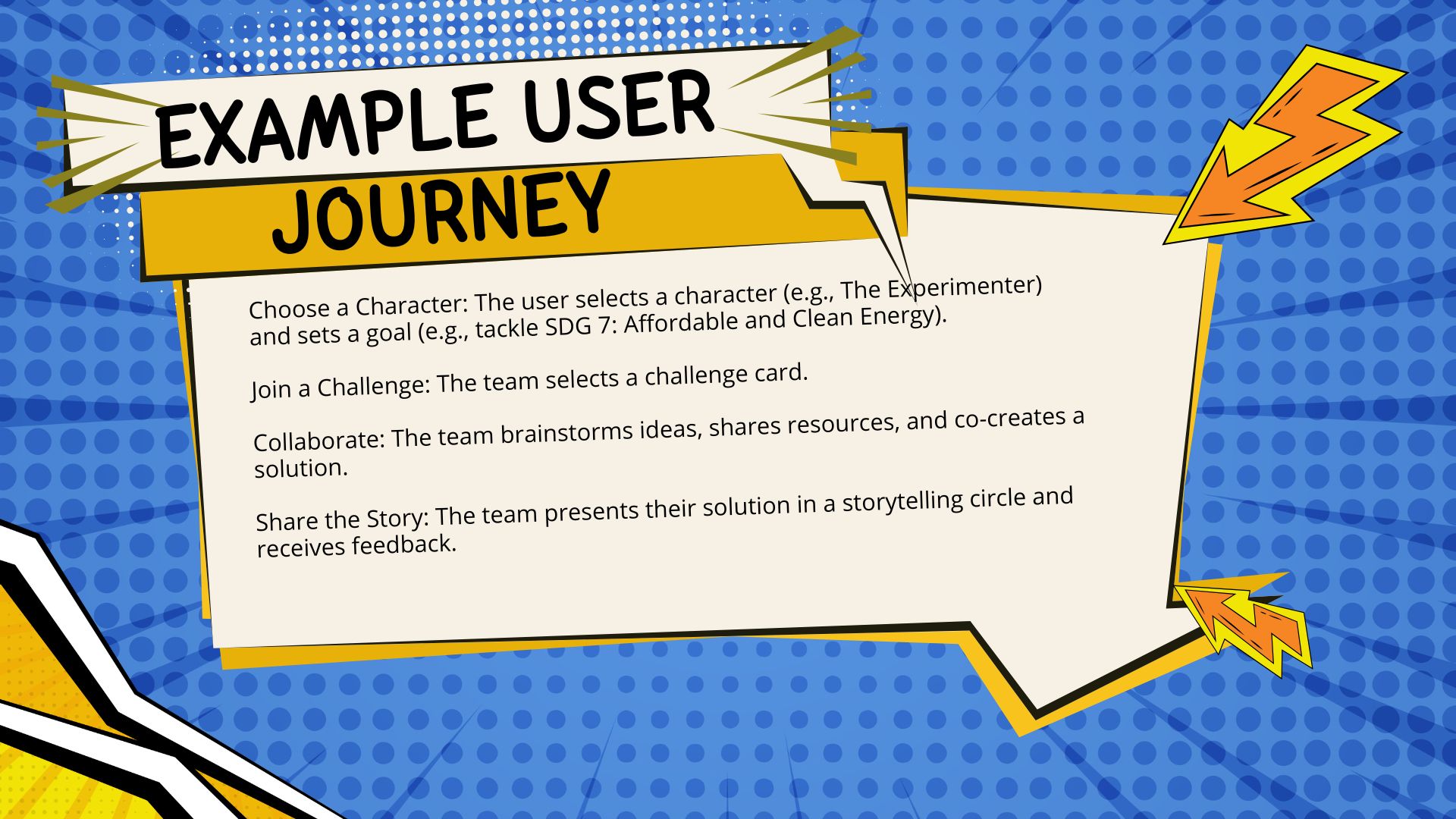
Typical User Journey at game play
Typical User Journey at game play
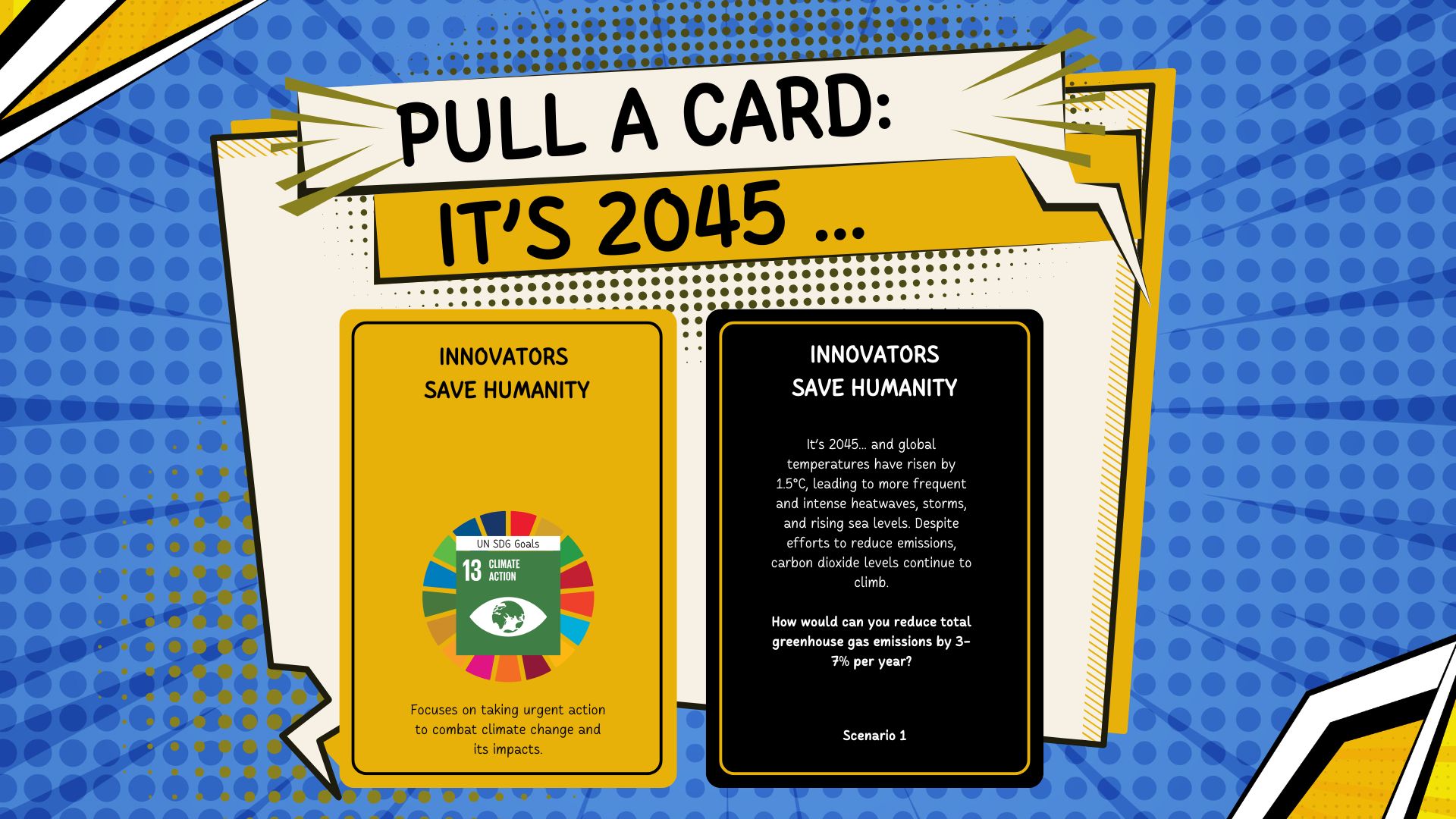
SDG scenario card — a projected 2045 climate future framed as a live design problem
SDG scenario card — a projected 2045 climate future framed as a live design problem
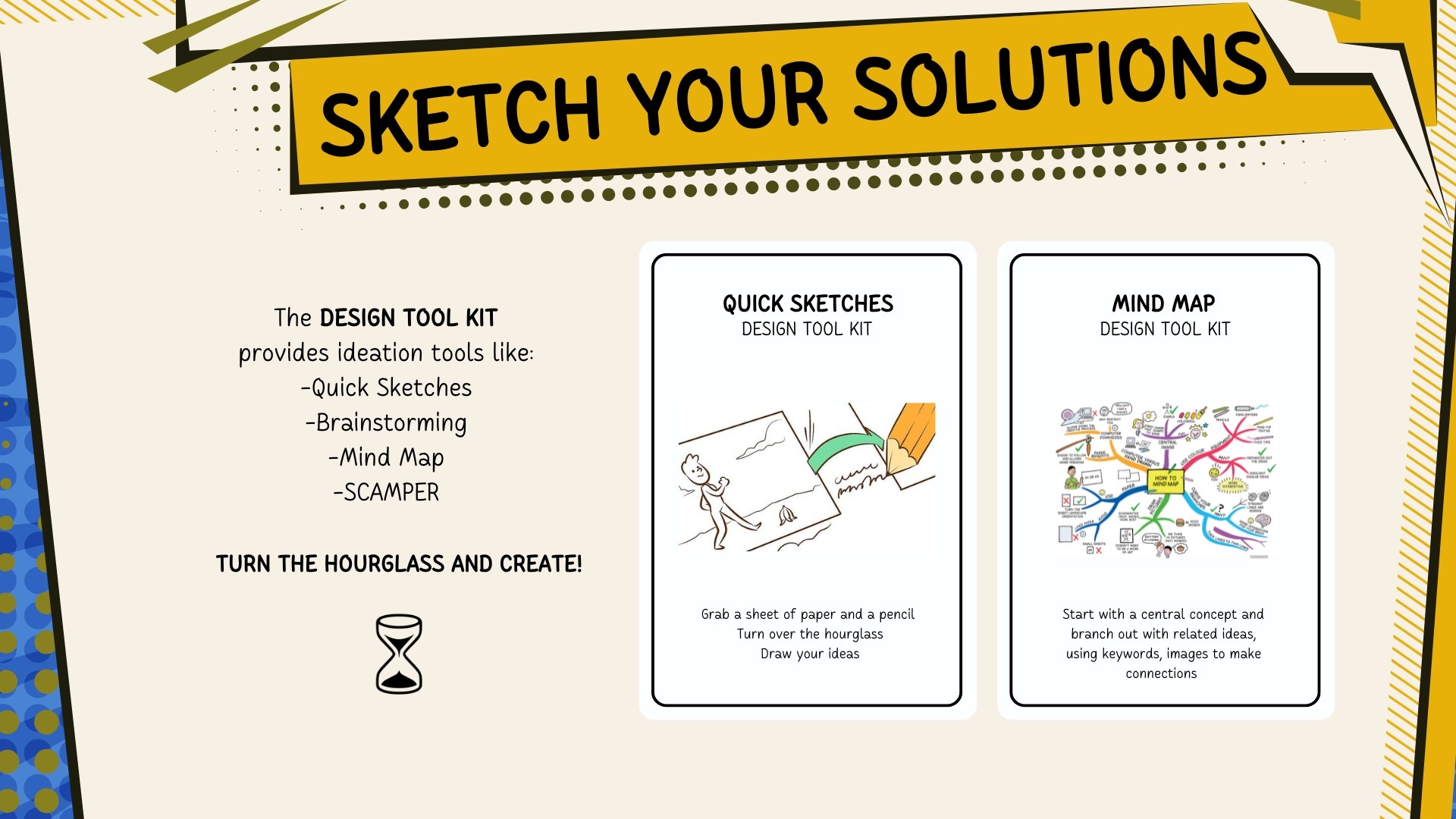
Ideation toolkit — quick sketches and mind mapping as structured thinking protocols within timed game rounds
Ideation toolkit — quick sketches and mind mapping as structured thinking protocols within timed game rounds
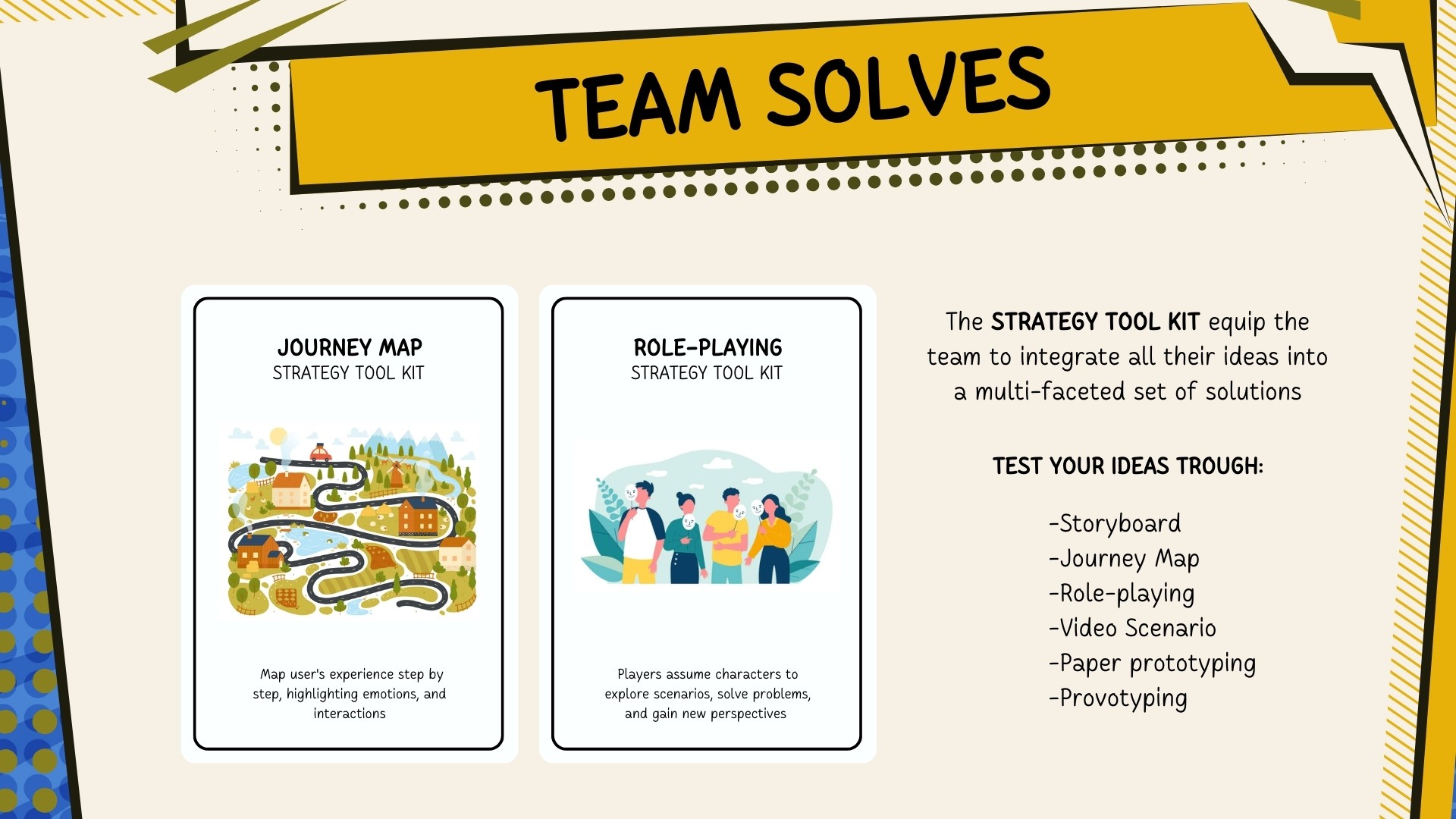
Strategy toolkit — journey mapping and role-play as methods for stress-testing solutions across stakeholder perspectives
Strategy toolkit — journey mapping and role-play as methods for stress-testing solutions across stakeholder perspectives
KEY INSIGHT
KEY INSIGHT
The learning didn't happen during the scenario — it happened in the friction between characters.
The learning didn't happen during the scenario — it happened in the friction between characters.
When an Anthropologist and a Hurdler disagreed about how to approach the same problem, students weren't just playing a game; they were practicing the negotiation of expertise across difference.
When an Anthropologist and a Hurdler disagreed about how to approach the same problem, students weren't just playing a game; they were practicing the negotiation of expertise across difference.
Futures thinking isn't a skill you can lecture into existence. It requires a rehearsal space where the consequences feel real enough to generate genuine decisions, and safe enough to fail.
Futures thinking isn't a skill you can lecture into existence. It requires a rehearsal space where the consequences feel real enough to generate genuine decisions, and safe enough to fail.
OUTCOME
OUTCOME
A full game system — scenario cards, character role cards, design and strategy toolkits, facilitation guide, and debrief protocol — designed to be deployed as a standalone session or compulsory experiential learning module.
A full game system — scenario cards, character role cards, design and strategy toolkits, facilitation guide, and debrief protocol — designed to be deployed as a standalone session or compulsory experiential learning module.
Winning solutions are fed into a shared database with PRME and UN stakeholders for evaluation, giving players a direct line between their in-game thinking and real-world implementation.
The game builds what the SDG challenge actually requires: not more awareness, but more people who have practiced imagining futures and working across roles to build them.
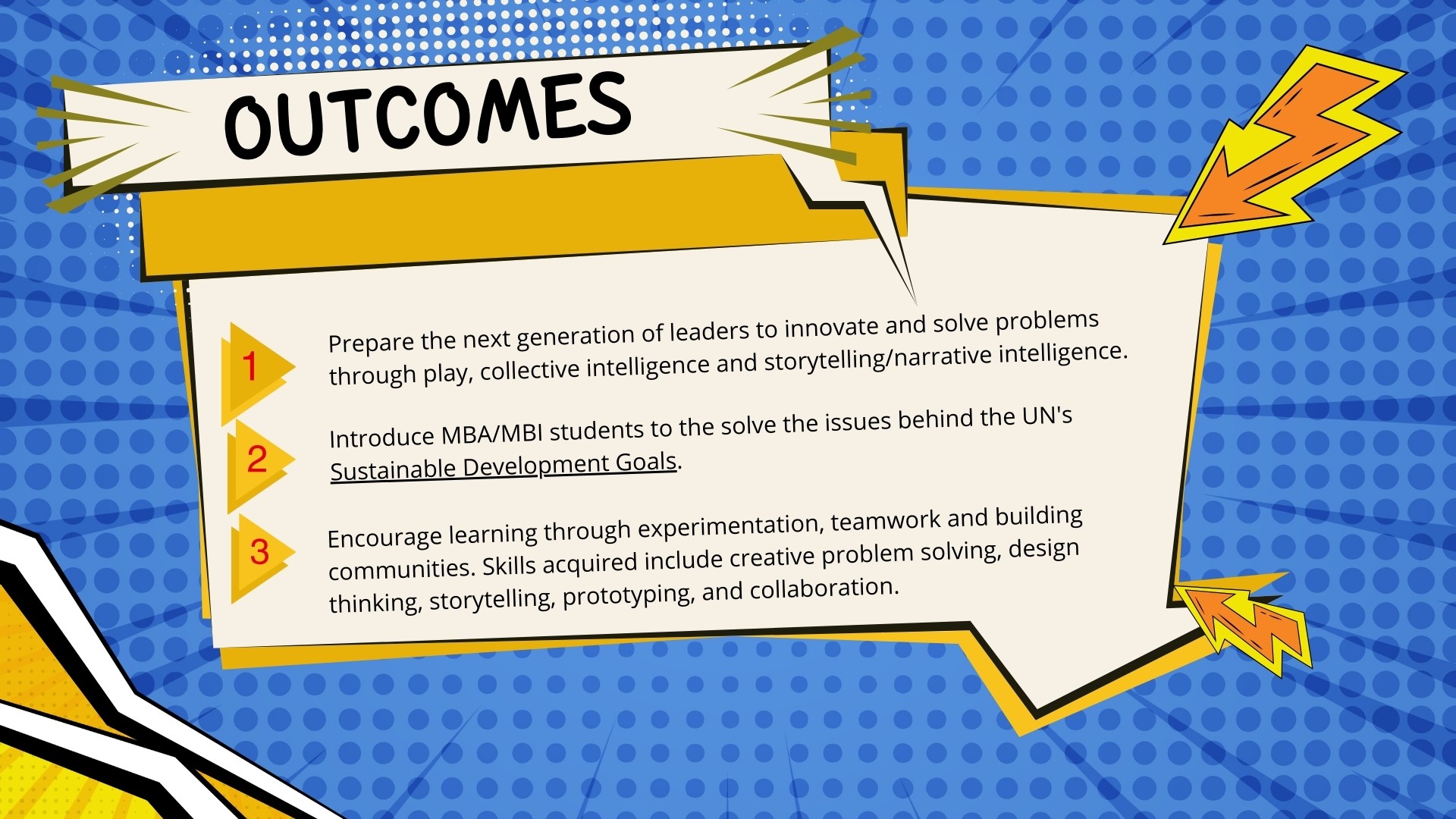
SDG scenario card system — real-world futures framed as design problems across four UN goals
SDG scenario card system — real-world futures framed as design problems across four UN goals
Open to new roles- Seattle & Remote
Looking for research and strategy roles where the insight
actually shapes what gets built, not just validates it after the fact.
Nitya Jois | Seattle WA
Open to new roles- Seattle & Remote
Looking for research and strategy roles where the insight actually shapes what gets built, not just validates it after the fact.
Nitya Jois | Seattle WA
Open to new roles- Seattle & Remote
Looking for research and strategy roles where the insight
actually shapes what gets built, not just validates it after the fact.
Nitya Jois | Seattle WA