
Designing brand behavior systems for AI products
Designing brand behavior systems for AI products
When the product works but the brand doesn't. The real trust gap isn't in the product. It's in the voice.
When the product works but the brand doesn't. The real trust gap isn't in the product. It's in the voice.
CONTEXT
CONTEXT
An AI mock interview platform had a functional MVP and a founder who understood the space deeply. Adoption wasn't growing. The instinct was to fix messaging. The actual problem was that the brand was performing authority when users needed partnership and users were quietly disengaging as a result.
An AI mock interview platform had a functional MVP and a founder who understood the space deeply. Adoption wasn't growing. The instinct was to fix messaging. The actual problem was that the brand was performing authority when users needed partnership and users were quietly disengaging as a result.
MY ROLE
MY ROLE
Brand Strategist & Workshop Facilitator
Brand Strategist & Workshop Facilitator
Responsible for surfacing the founder-user perception gap and translating it into a scalable voice and behavior system.
Responsible for surfacing the founder-user perception gap and translating it into a scalable voice and behavior system.
APPROACH
APPROACH
A brand diagnostic workshop with the founder to surface assumptions about authority and credibility.
A brand diagnostic workshop with the founder to surface assumptions about authority and credibility.
User co-creation sessions to capture emotional expectations and mental models.
User co-creation sessions to capture emotional expectations and mental models.
Founder vs. user perception mapping to locate where intent and experience diverged and why.
Founder vs. user perception mapping to locate where intent and experience diverged and why.
RESEARCH ARTIFACTS
RESEARCH ARTIFACTS
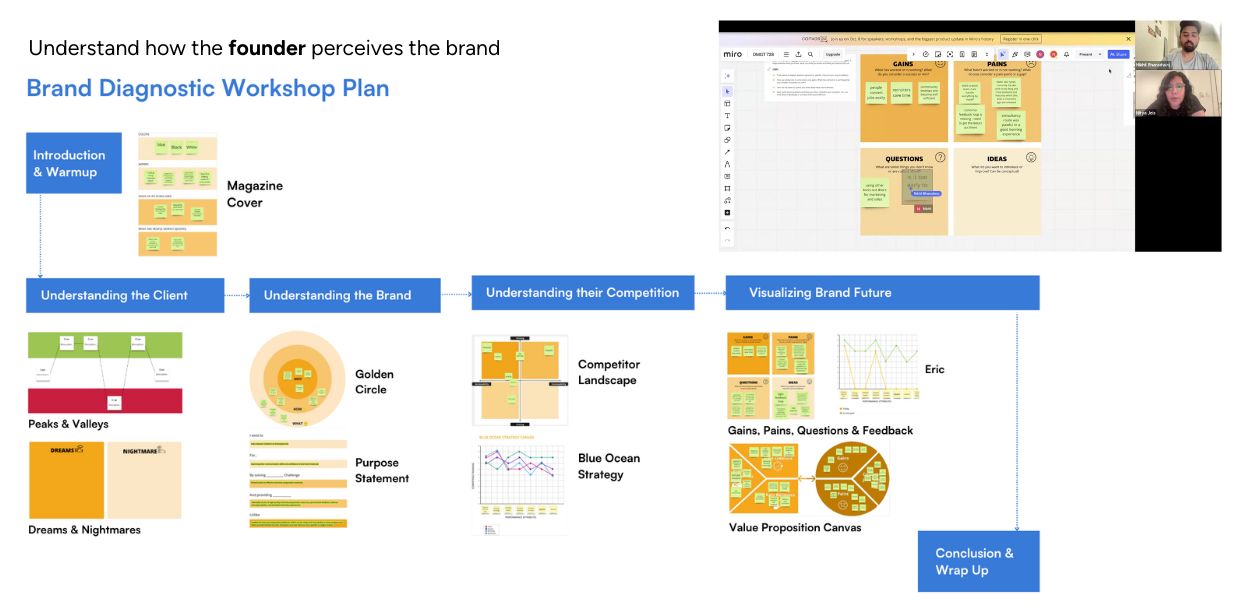
Brand diagnostic workshop
Brand diagnostic workshop
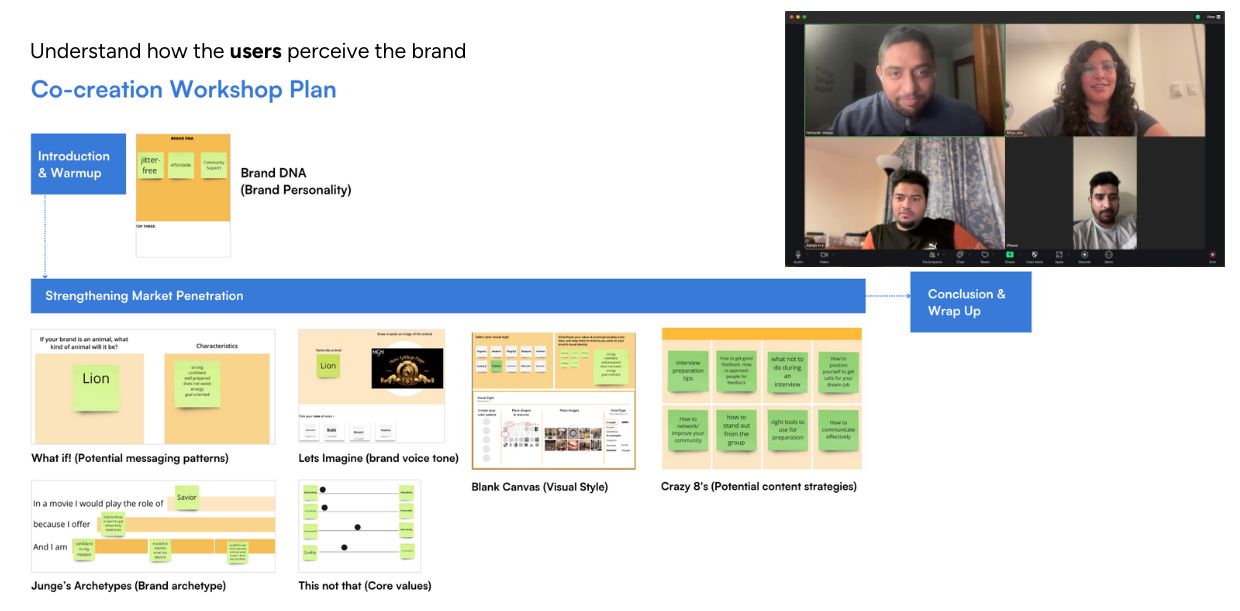
User perception mapping
User perception mapping
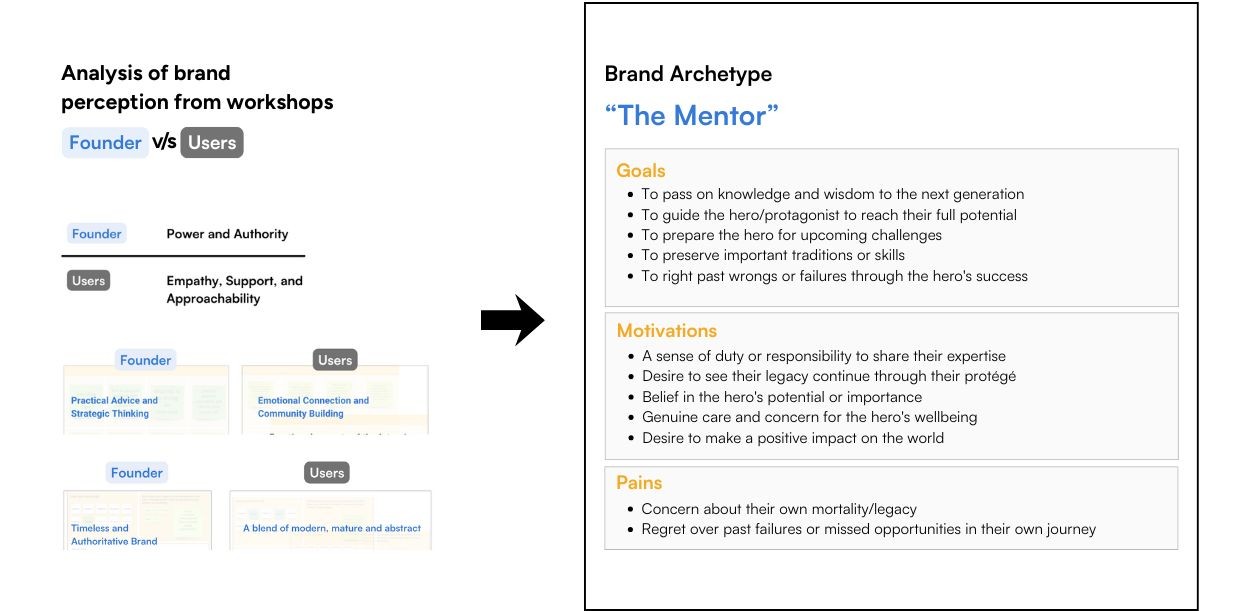
Founder vs. User Gap Analysis & Archetype Definition
Founder vs. User Gap Analysis & Archetype Definition
KEY INSIGHT
KEY INSIGHT
Users engaged more deeply when the brand felt like a growth partner rather than an evaluator.
Users engaged more deeply when the brand felt like a growth partner rather than an evaluator.
The founder-user gap wasn't about features, it was about the emotional contract the brand implied.
The founder-user gap wasn't about features, it was about the emotional contract the brand implied.
Trust in AI products is shaped less by capability claims and more by tone, boundaries, and how the product speaks when a user struggles or stakes feel high.
Trust in AI products is shaped less by capability claims and more by tone, boundaries, and how the product speaks when a user struggles or stakes feel high.
OUTCOME
OUTCOME
A brand behavior system, not a rebrand, built around one reorienting principle: authority earns credibility; partnership builds trust.
A brand behavior system, not a rebrand, built around one reorienting principle: authority earns credibility; partnership builds trust.
Delivered as a positioning document, voice and tone system, and messaging pillars designed to support both acquisition and long-term engagement.
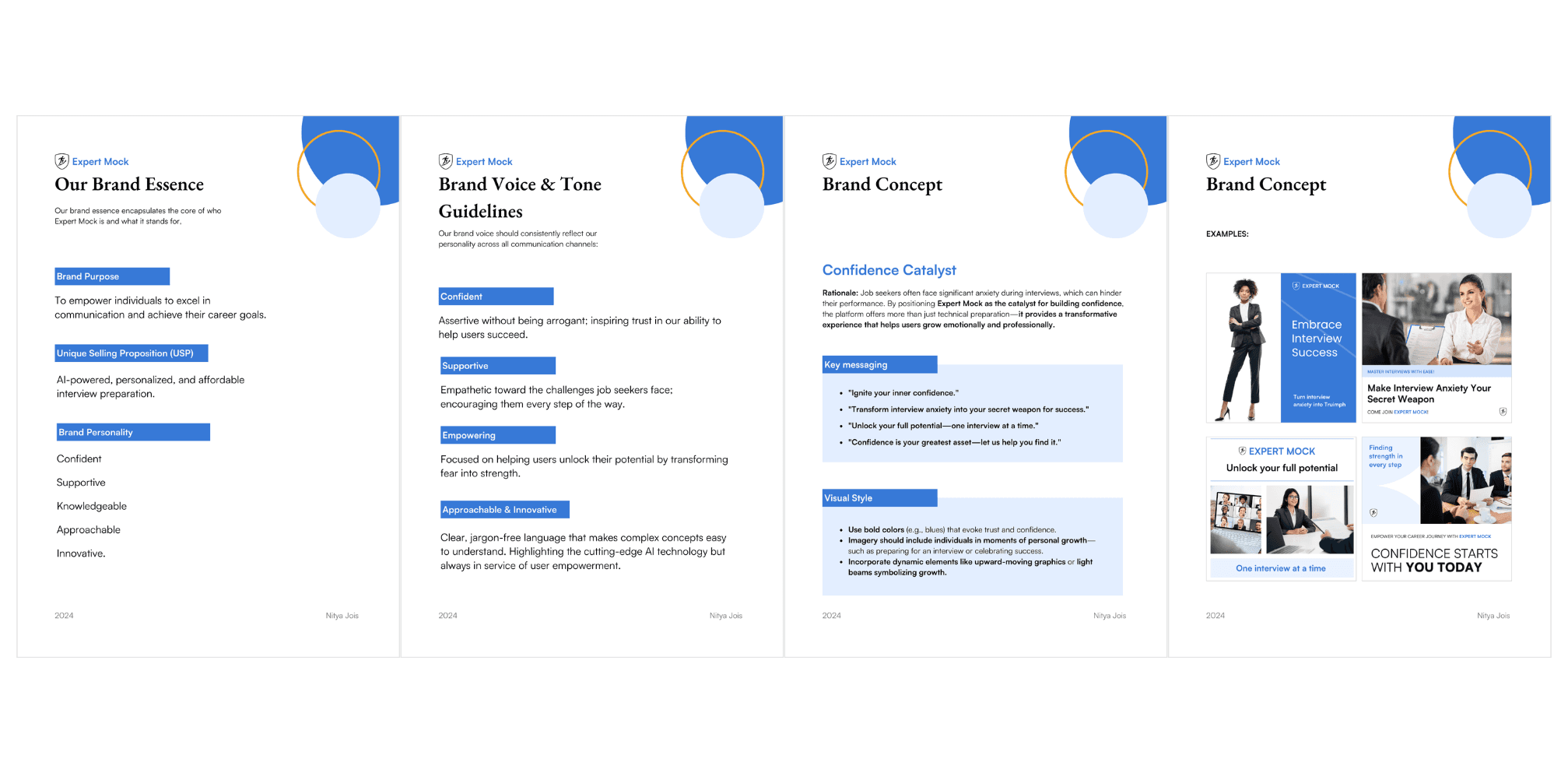
Brand Behavior Principles, Voice & Tone System
Brand Behavior Principles, Voice & Tone System
Open to new roles- Seattle & Remote
Looking for research and strategy roles where the insight
actually shapes what gets built, not just validates it after the fact.
Nitya Jois | Seattle WA
Open to new roles- Seattle & Remote
Looking for research and strategy roles where the insight actually shapes what gets built, not just validates it after the fact.
Nitya Jois | Seattle WA
Open to new roles- Seattle & Remote
Looking for research and strategy roles where the insight
actually shapes what gets built, not just validates it after the fact.
Nitya Jois | Seattle WA