
Case Study — Global Mobility / Service Design
Case Study — Global Mobility / Service Design
NewRoots
NewRoots
RETHINKING SPOUSAL RELOCATION
Relocation systems support the employee. They overlook the spouse and the identity they lose. I designed for the invisible stakeholder.
RETHINKING SPOUSAL RELOCATION
Relocation systems support the employee. They overlook the spouse and the identity they lose. I designed for the invisible stakeholder.
Role
Role
Design Researcher & Strategist
Design Researcher & Strategist
Duration
Duration
6 months
6 months
Industry
Industry
Global Mobility / HR Tech
Global Mobility / HR Tech
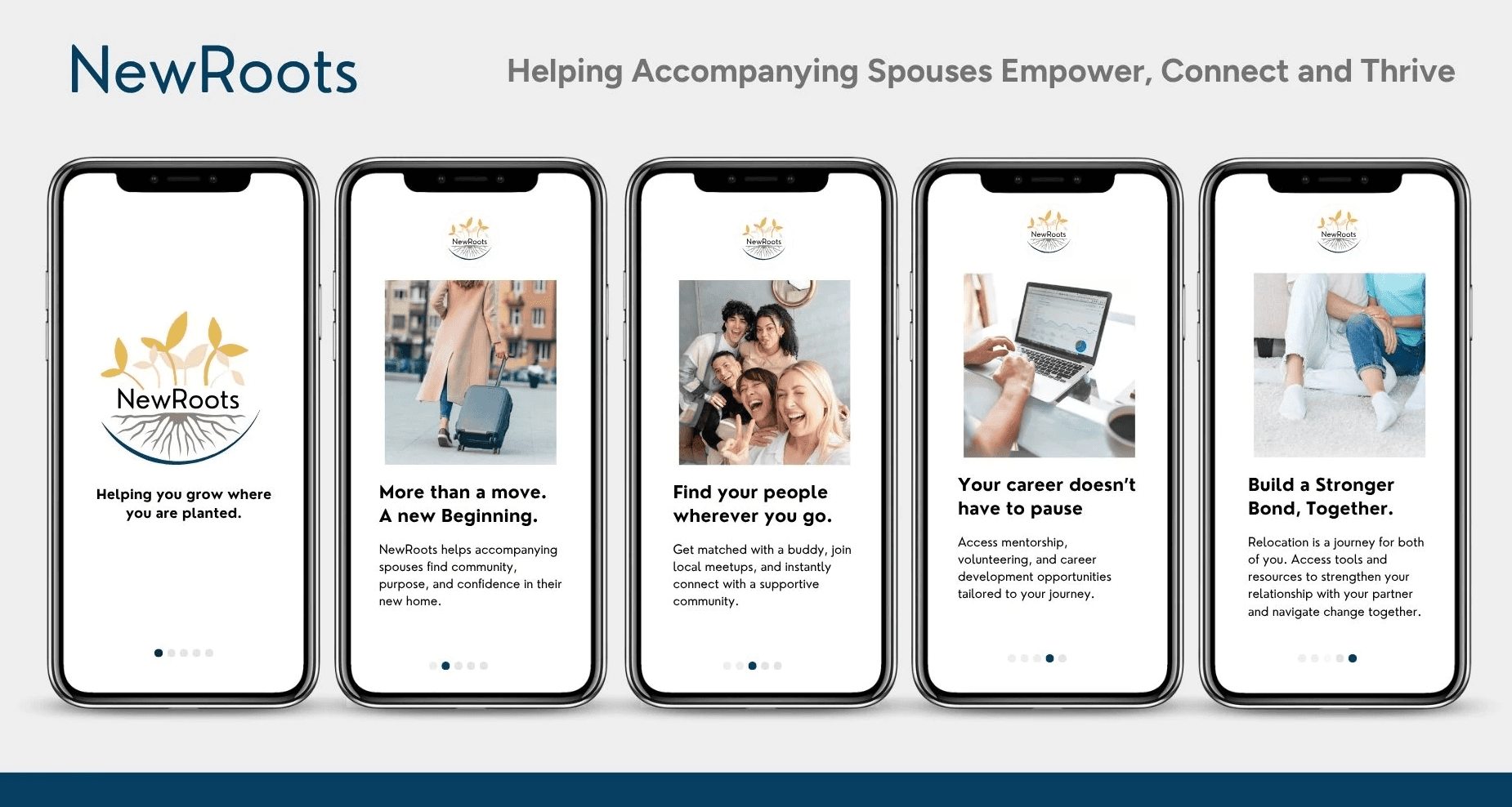
NewRoots Digital Product
NewRoots Digital Product
86%
86%
Adoption intent during concept and storyboard testing
Adoption intent during concept and storyboard testing
2×
2×
Increase in perceived support from emotionally-timed interventions
Increase in perceived support from emotionally-timed interventions
300K
300K
Accompanying spouses relocating to the U.S. annually, structurally unsupported
Accompanying spouses relocating to the U.S. annually, structurally unsupported
15–20%
15–20%
Projected improvement in employee retention in target groups
Projected improvement in employee retention in target groups
01 - CONTEXT
01 - CONTEXT
They weren't struggling to relocate. They were struggling to exist.
They weren't struggling to relocate. They were struggling to exist.
Over 300,000 accompanying spouses relocate to the U.S. each year to support a partner's career or education. Many are highly educated, career-driven individuals. Within months, they have lost professional continuity, social networks, and daily structure, all at once, with no designed support to catch them.
Relocation systems address housing, paperwork, and orientation. They treat a longitudinal human transition as a one-time logistical event. That framing gap was the design problem.
Over 300,000 accompanying spouses relocate to the U.S. each year to support a partner's career or education. Many are highly educated, career-driven individuals. Within months, they have lost professional continuity, social networks, and daily structure, all at once, with no designed support to catch them.
Relocation systems address housing, paperwork, and orientation. They treat a longitudinal human transition as a one-time logistical event. That framing gap was the design problem.
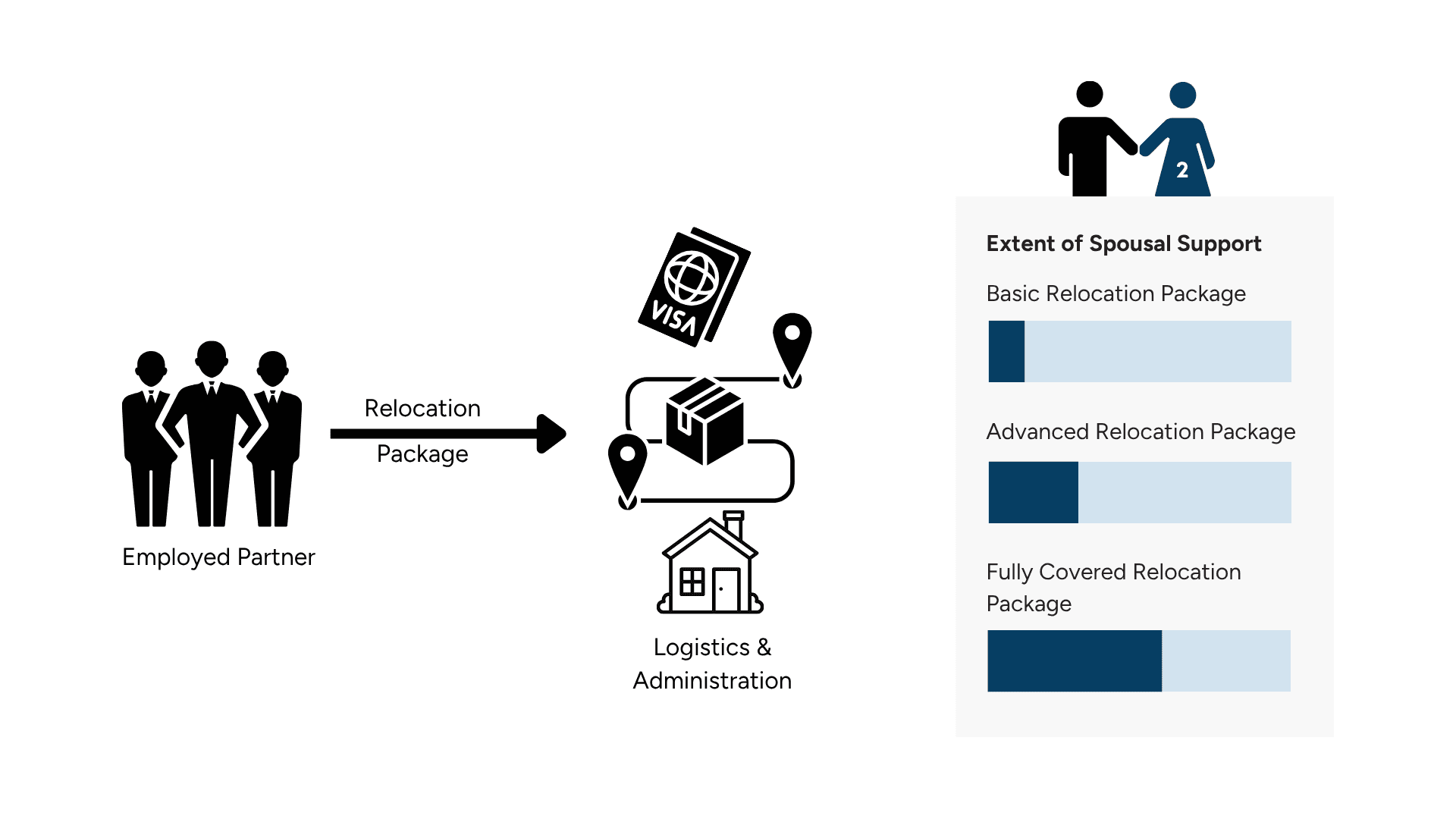
Employer Spousal Support Landscape
Employer Spousal Support Landscape
02 - RESEARCH
02 - RESEARCH
How do you map an experience that institutions have decided doesn't exist?
How do you map an experience that institutions have decided doesn't exist?
A triangulated, mixed-methods strategy:
6 in-depth interviews across India, Korea, China, and Mexico;
a 54-person survey;
social listening on Reddit, Medium, and expat forums; and
a 3-hour co-design workshop with spouses at different relocation stages.
The workshop surfaces what interview couldn't: Shared patterns across nationalities and visa types that participants had assumed were personal failures.
A triangulated, mixed-methods strategy:
6 in-depth interviews across India, Korea, China, and Mexico;
a 54-person survey;
social listening on Reddit, Medium, and expat forums; and
a 3-hour co-design workshop with spouses at different relocation stages.
The workshop surfaces what interview couldn't: Shared patterns across nationalities and visa types that participants had assumed were personal failures.
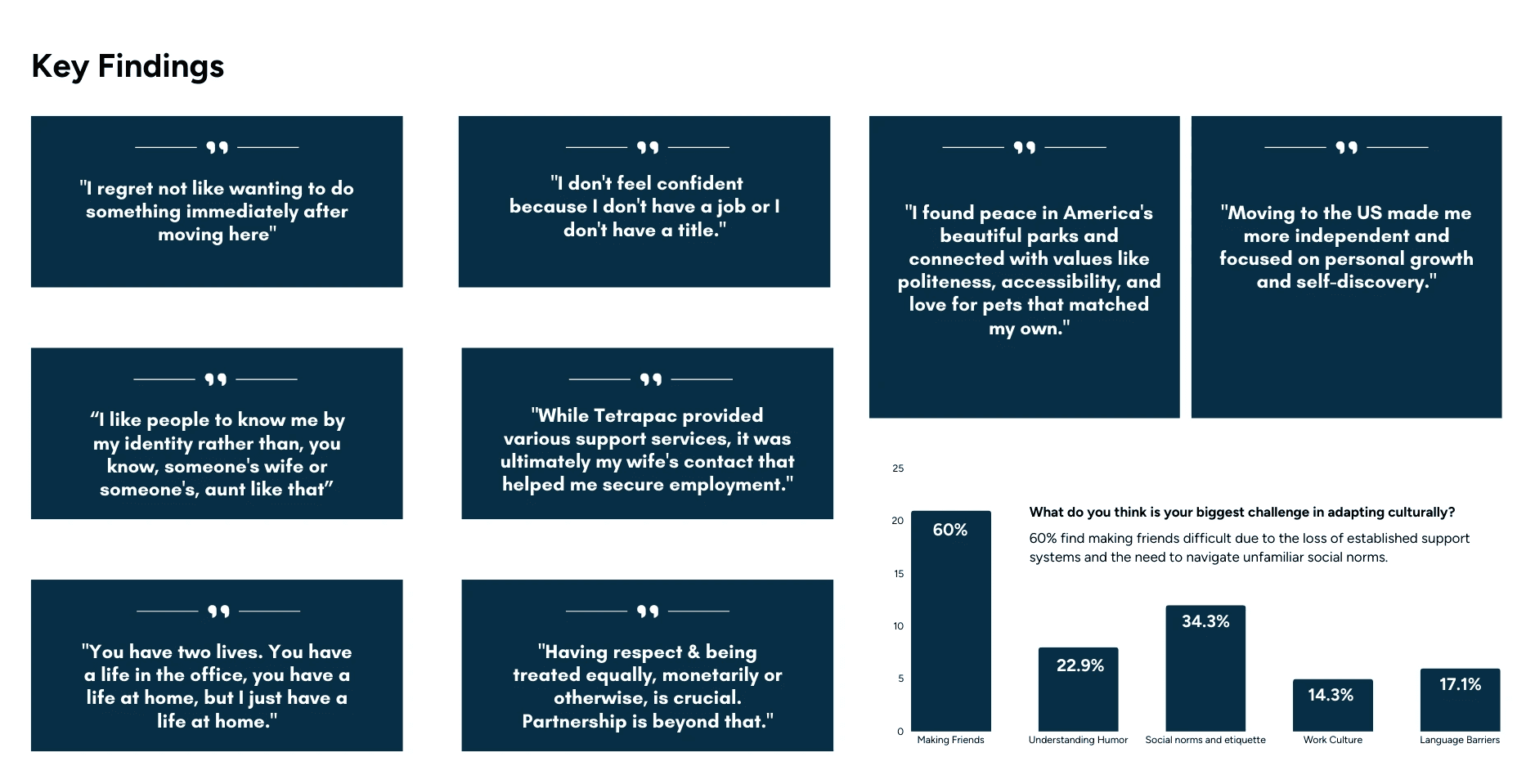
Interview quotes and survey analysis.
Interview quotes & survey analysis.
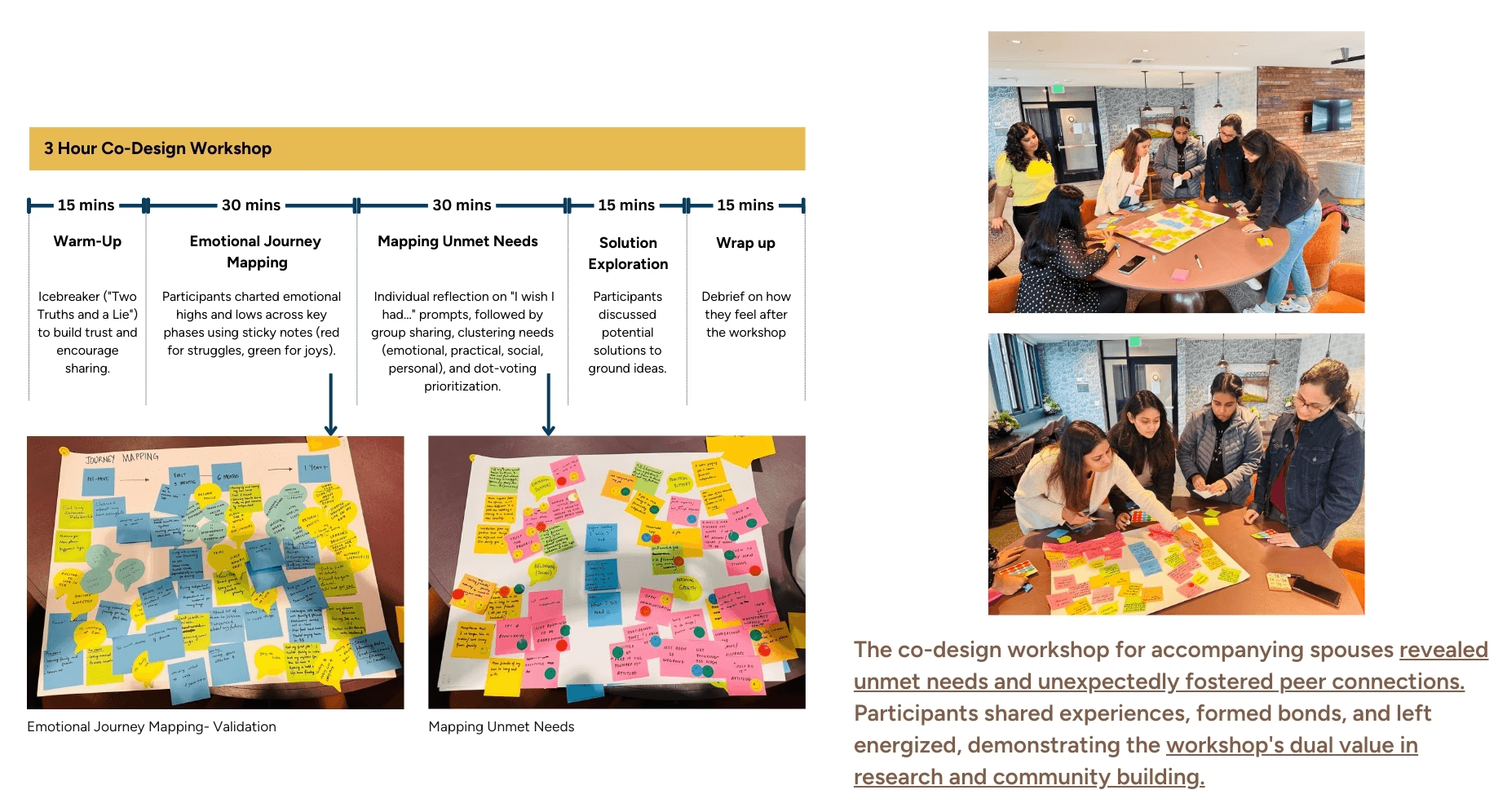
Co-design Workshop
Co-design Workshop
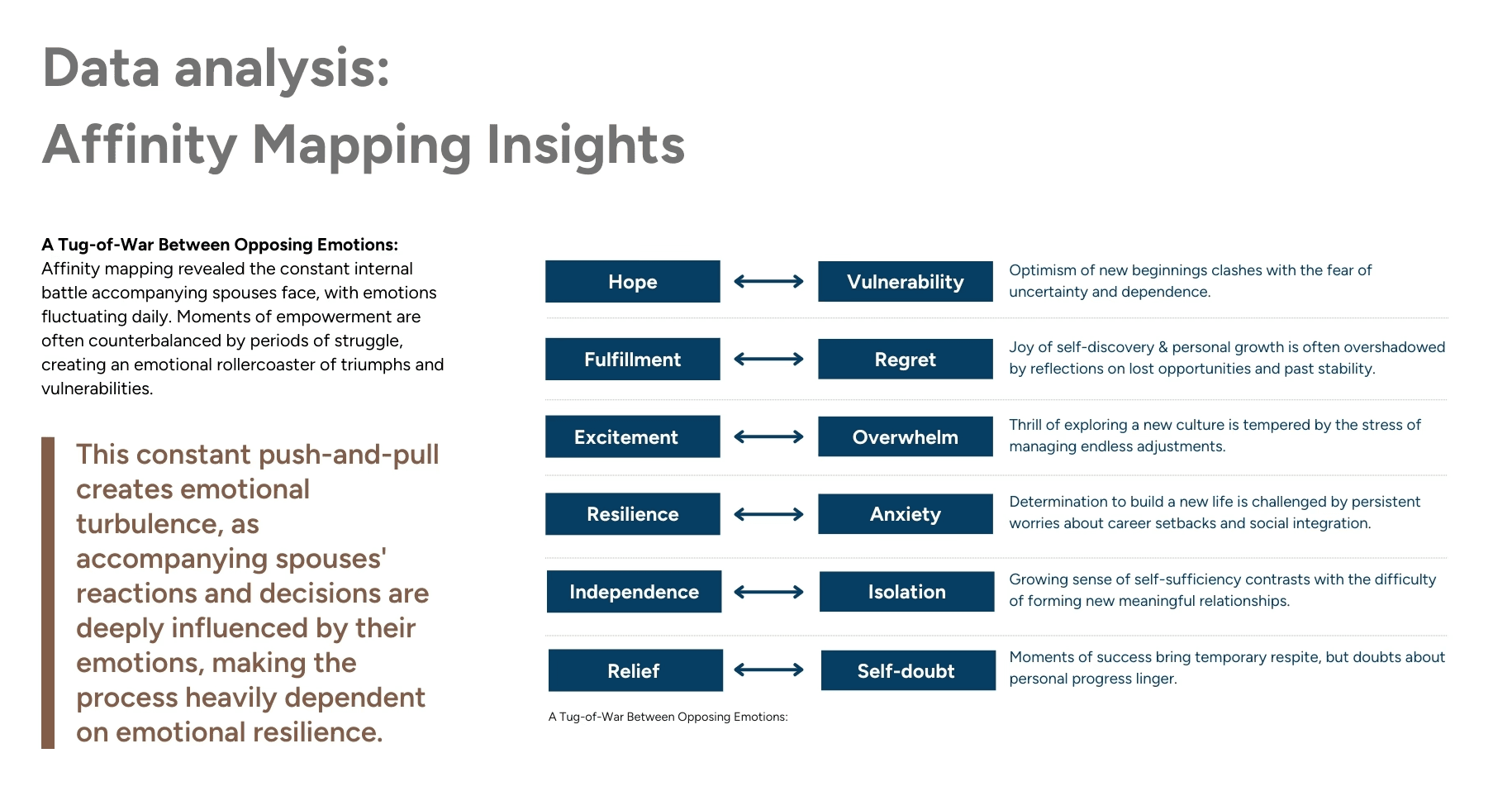
Affinity Mapping Insights
Affinity Mapping Insights
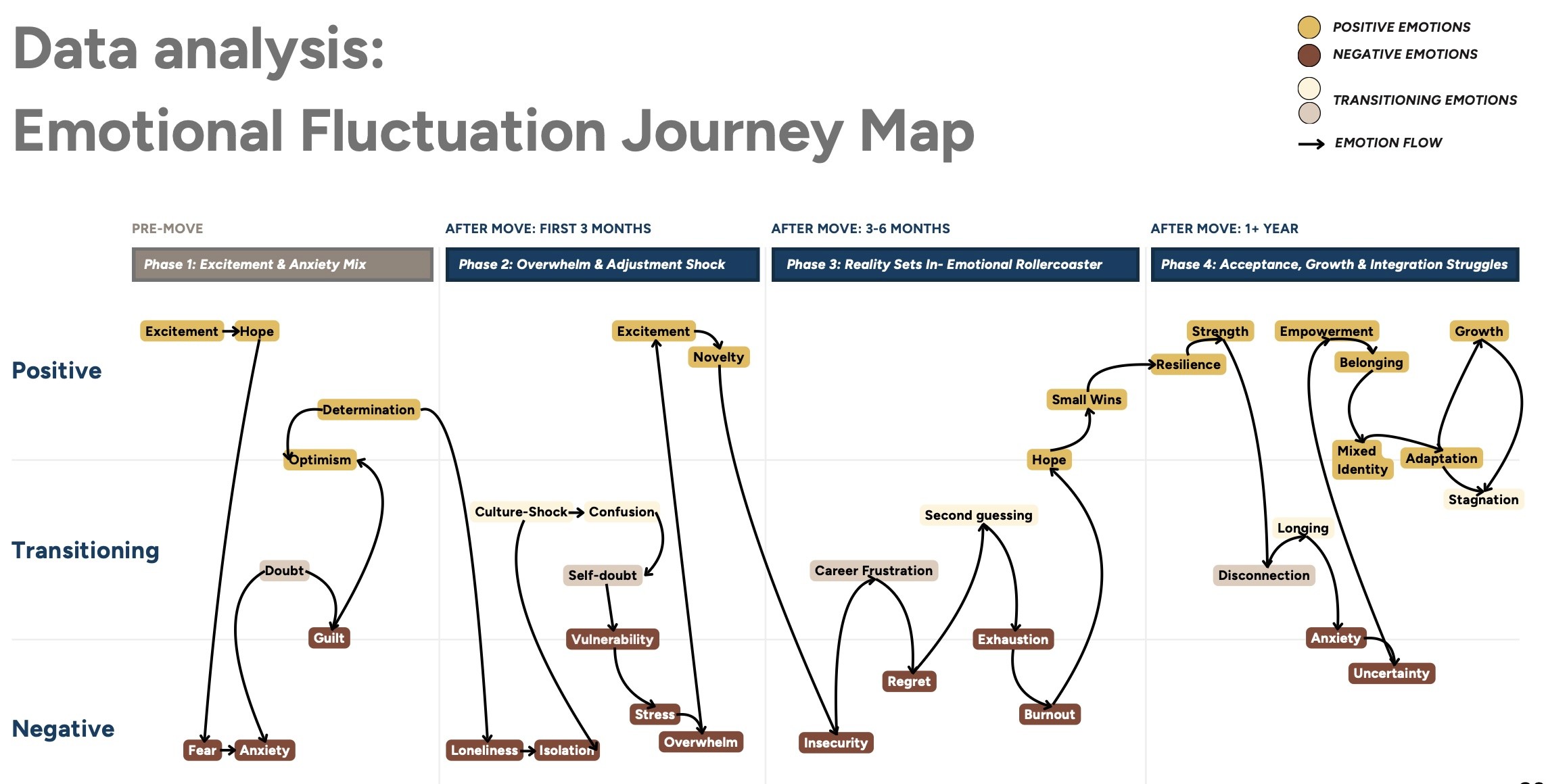
Emotional fluctuation in the first year of relocation
Emotional fluctuation in the first year of relocation
03 - INSIGHTS
03 - INSIGHTS
What does identity disruption actually feel like as a service gap?
What does identity disruption actually feel like as a service gap?
01
01
Relocation disrupts identity, not just logistics.
Relocation disrupts identity, not just logistics.
Participants described loss of professional identity, confidence, and self-worth as more distressing than any practical barrier. The emotional dimension wasn't incidental, it was the primary experience.
Participants described loss of professional identity, confidence, and self-worth as more distressing than any practical barrier. The emotional dimension wasn't incidental, it was the primary experience.
02
02
Adaptation is non-linear and emotional.
Adaptation is non-linear and emotional.
Emotional states moved in waves, optimism, isolation, frustration, resilience, not predictable stages. Linear relocation timelines fail to account for the actual rhythm of transition.
Emotional states moved in waves, optimism, isolation, frustration, resilience, not predictable stages. Linear relocation timelines fail to account for the actual rhythm of transition.
03
03
Fragmentation creates service debt.
Fragmentation creates service debt.
Support was scattered across forums, informal communities, and personal networks. Individuals were forced to coordinate their own care during periods of maximum vulnerability.
Support was scattered across forums, informal communities, and personal networks. Individuals were forced to coordinate their own care during periods of maximum vulnerability.
Emotional Journey Mapping
The shift from current to future state wasn't about removing emotional lows, it was about structuring interventions that reduced their depth and duration.
The shift from current to future state wasn't about removing emotional lows, it was about structuring interventions that reduced their depth and duration.
Current State
Current State
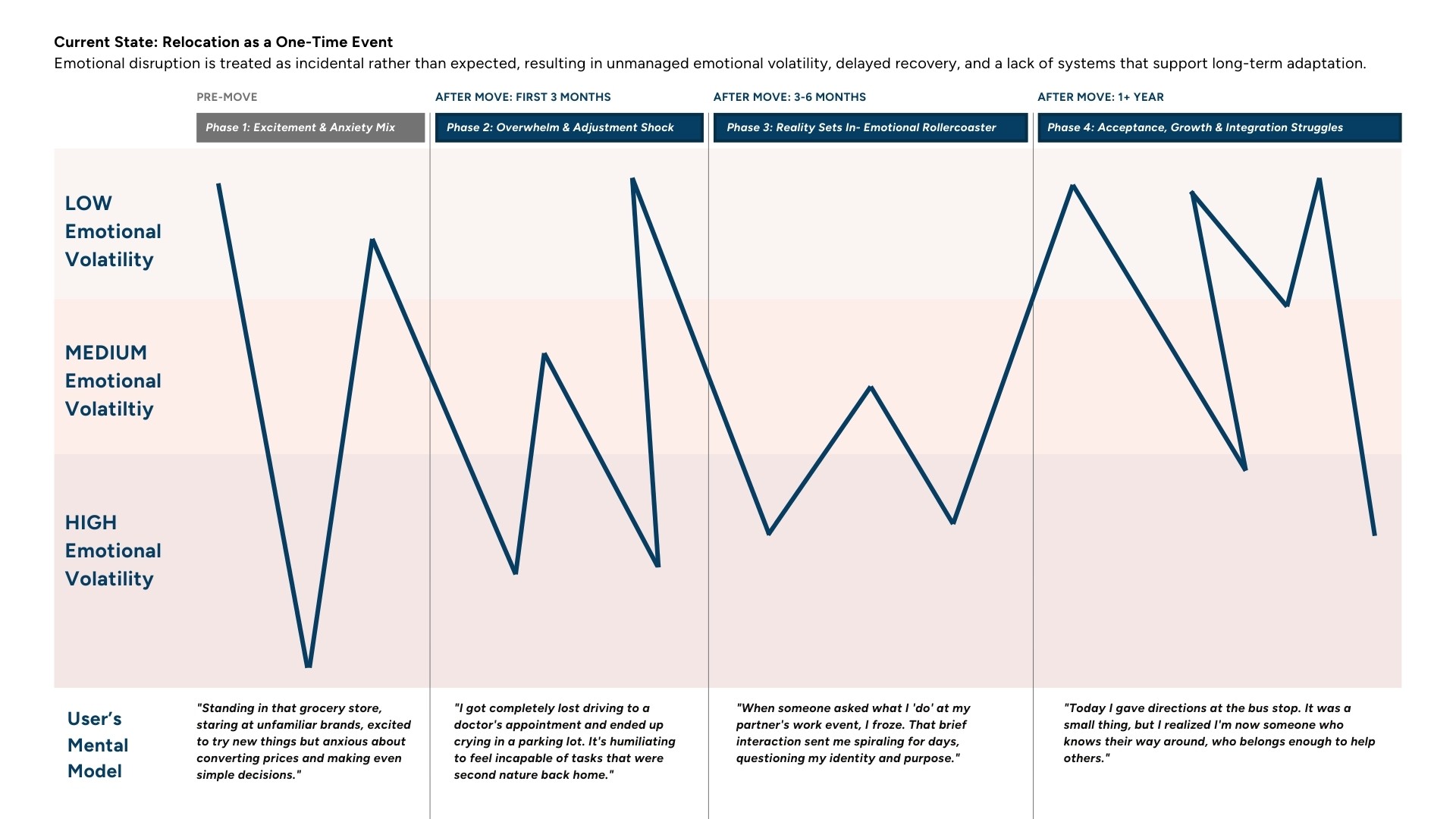
Current state emotional journey map
Current state emotional journey map
Future State
Future State
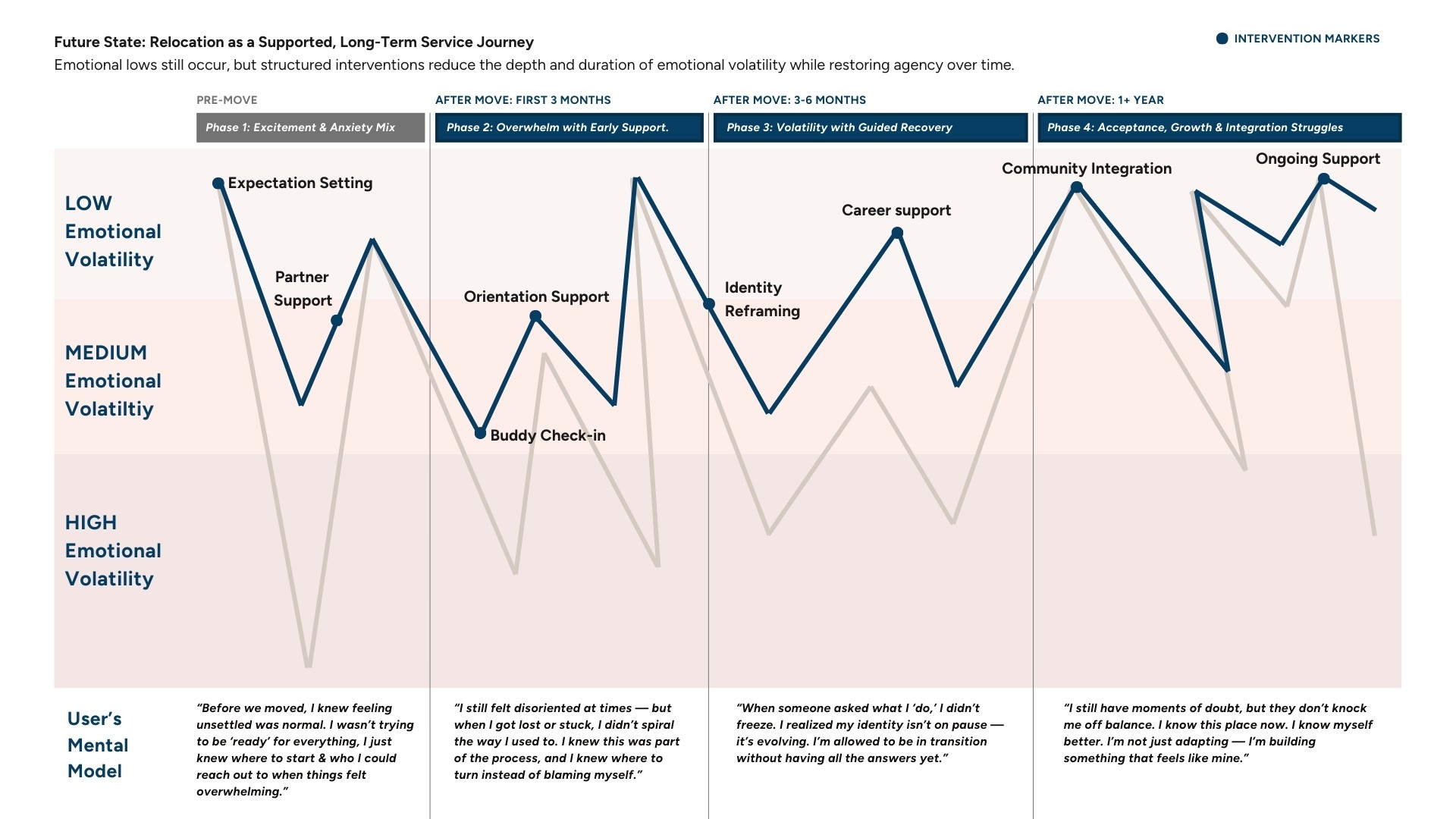
Future state emotional journey map
Future state emotional journey map
04 - STRATEGY
04 - STRATEGY
So what shifts when relocation is treated as a long-term human transition?
So what shifts when relocation is treated as a long-term human transition?
From
From
Relocation as a one-time logistical event
Relocation as a one-time logistical event
To
To
A longitudinal service journey with structured touchpoints across emotional, social, and professional dimensions
A longitudinal service journey with structured touchpoints across emotional, social, and professional dimensions
From
From
Static personas based on demographics
Static personas based on demographics
To
To
Behavioral archetypes that evolve, designed to flex as emotional state and agency shift
Behavioral archetypes that evolve, designed to flex as emotional state and agency shift
From
From
Information delivery and resource lists
Information delivery and resource lists
To
To
Agency-restoring support, interventions timed to emotional rhythms, not administrative milestones
Agency-restoring support, interventions timed to emotional rhythms, not administrative milestones
From
From
Isolated, ad-hoc support across forums and institutions
Isolated, ad-hoc support across forums and institutions
To
To
A coordinated service ecosystem: NewRoots, modular, multi-touchpoint, designed around identity recovery
A coordinated service ecosystem: NewRoots, modular, multi-touchpoint, designed around identity recovery
Behavioral Archetypes
Behavioral Archetypes
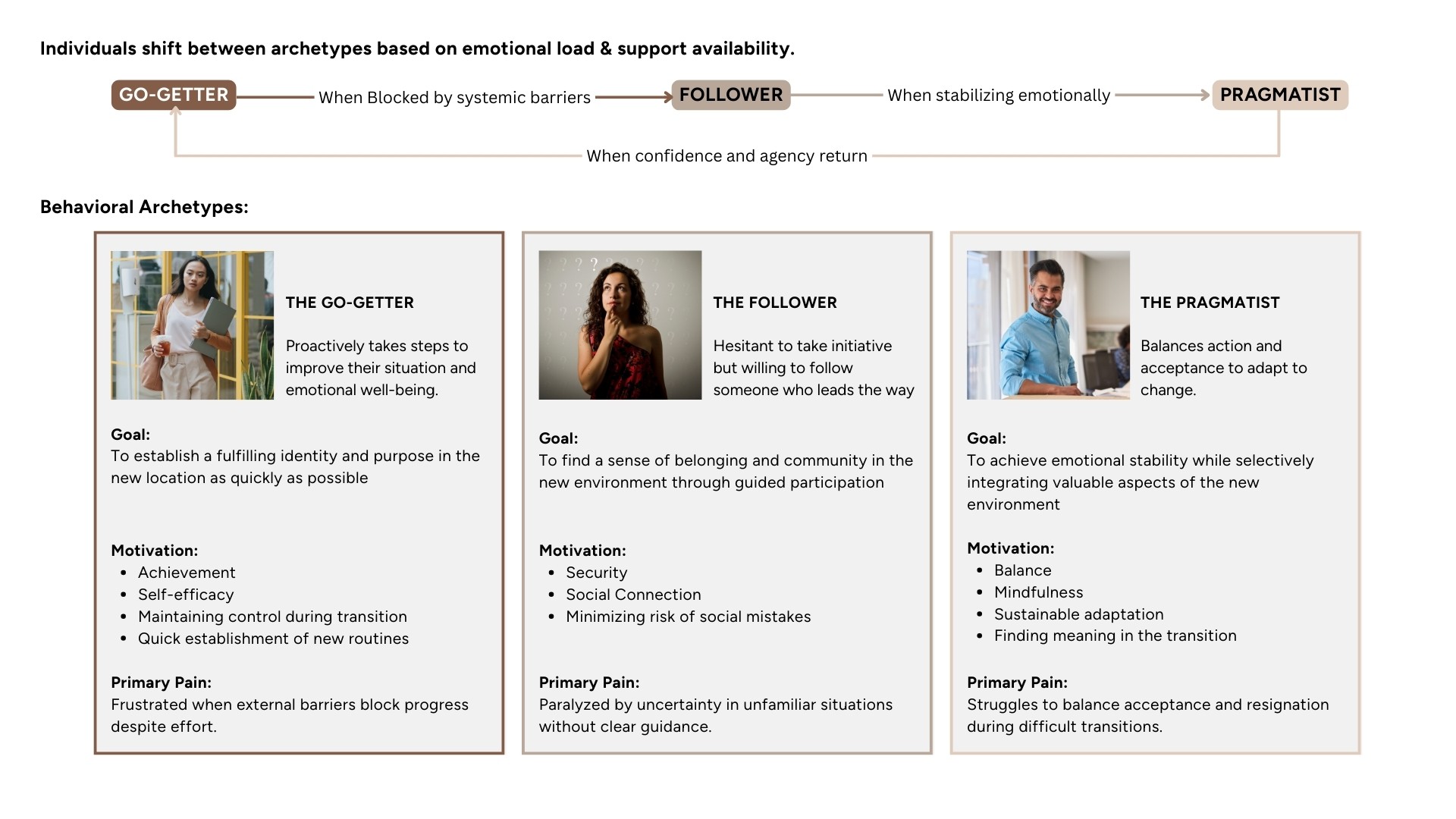
Behavioral Archetypes/ User Personas
Behavioral Archetypes/ User Personas
NewRoots modular ecosystem map
NewRoots modular ecosystem map
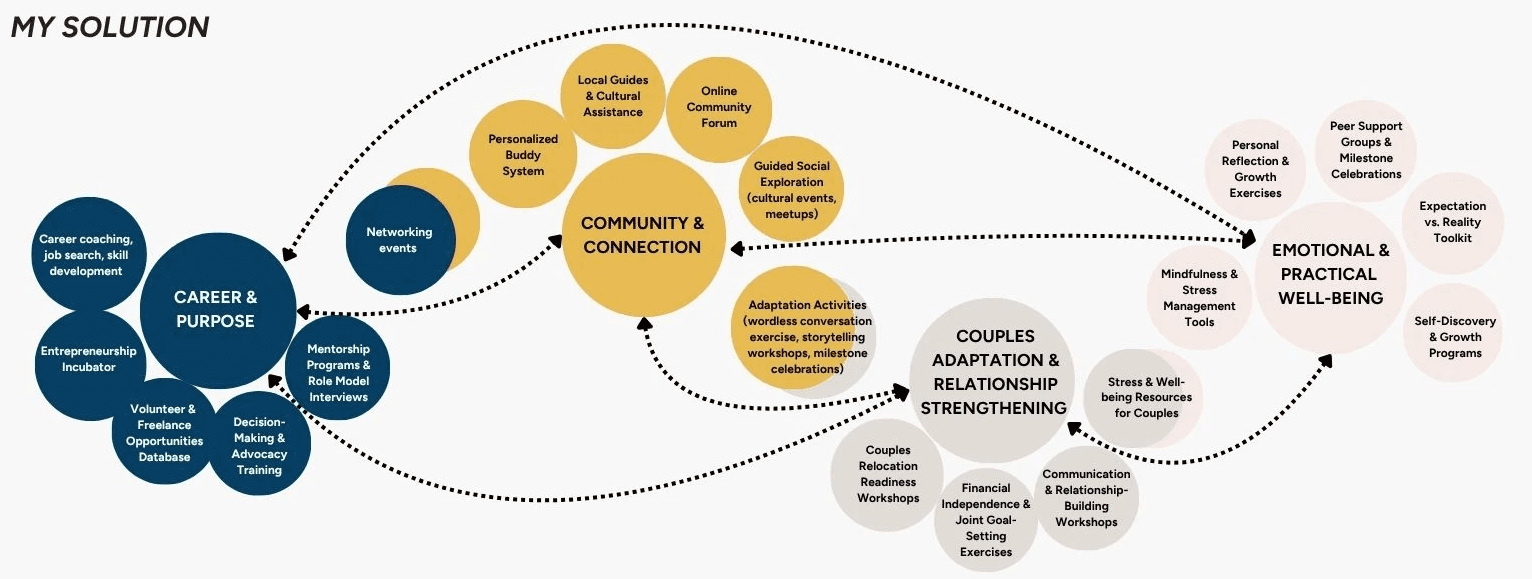
Modular ecosystem map
Modular ecosystem map
06 - SOLUTION
06 - SOLUTION
What does it feel like to be held by a system that was designed for you?
What does it feel like to be held by a system that was designed for you?
NewRoots unfolds across four storyboarded scenarios, each showing how digital and physical touchpoints work together at a specific emotional moment in the relocation arc.
NewRoots unfolds across four storyboarded scenarios, each showing how digital and physical touchpoints work together at a specific emotional moment in the relocation arc.
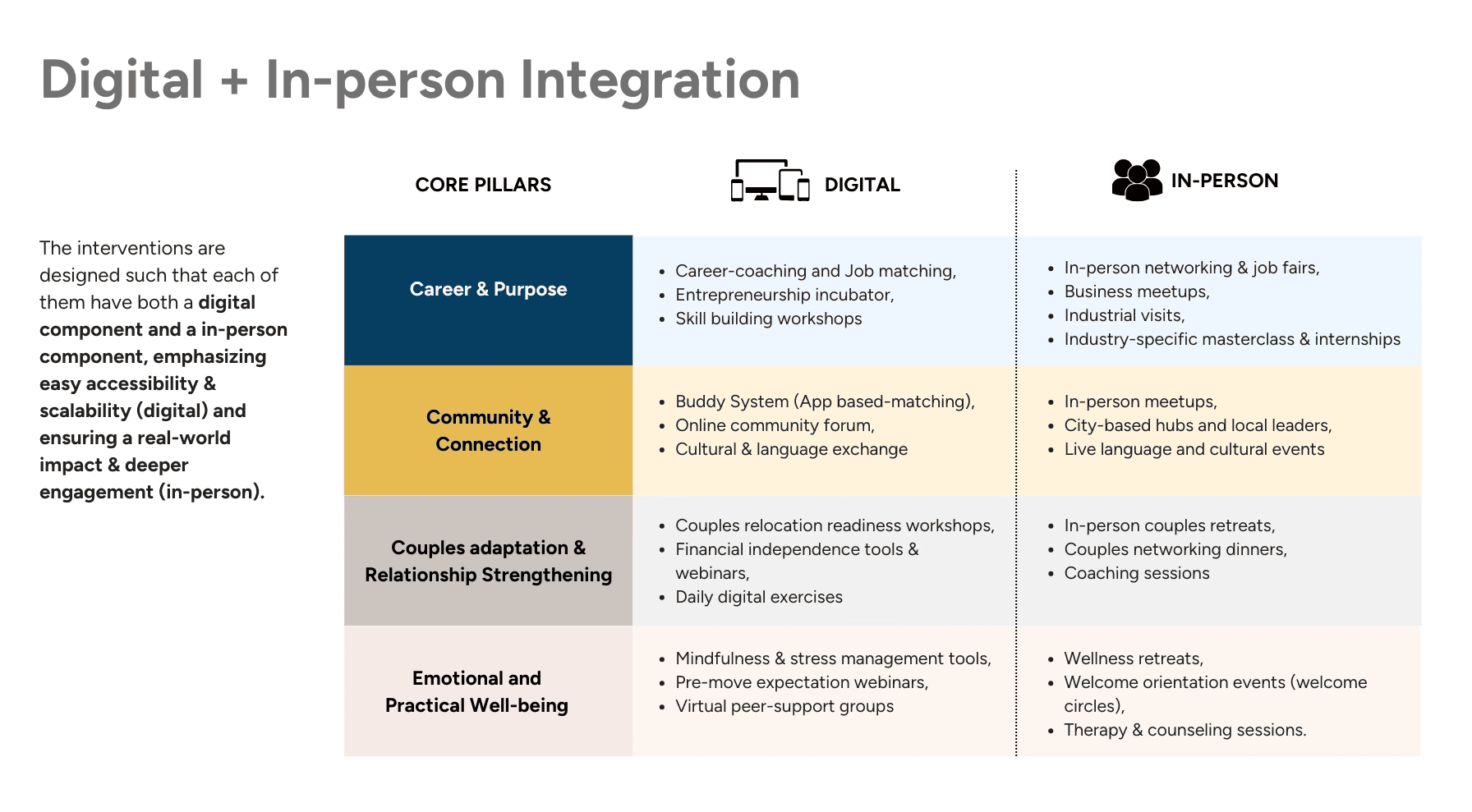
Digital × Physical Interaction Model
Digital × Physical Interaction Model
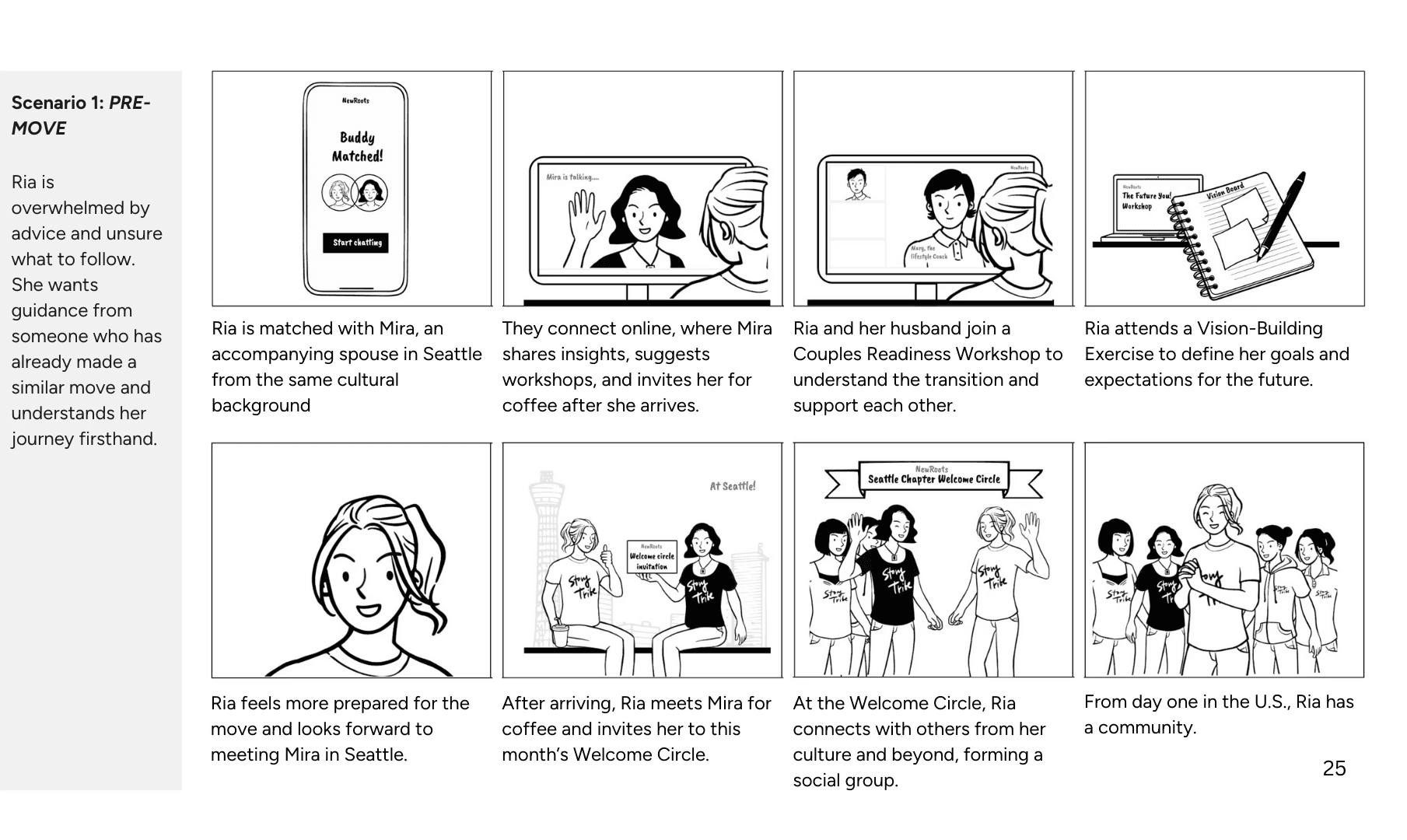
PreMove Storyboard
PreMove Storyboard
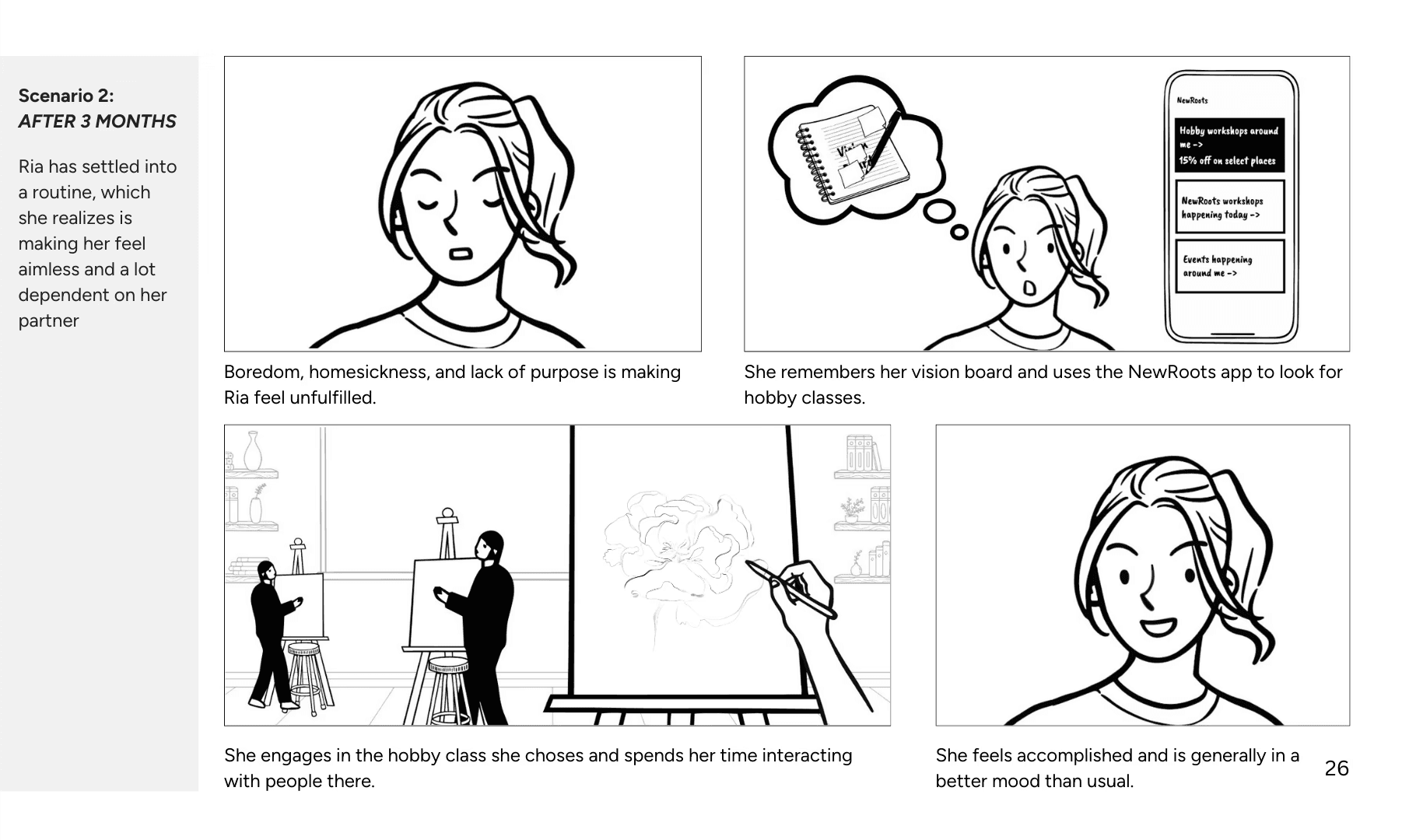
3 months after move
3 months after move
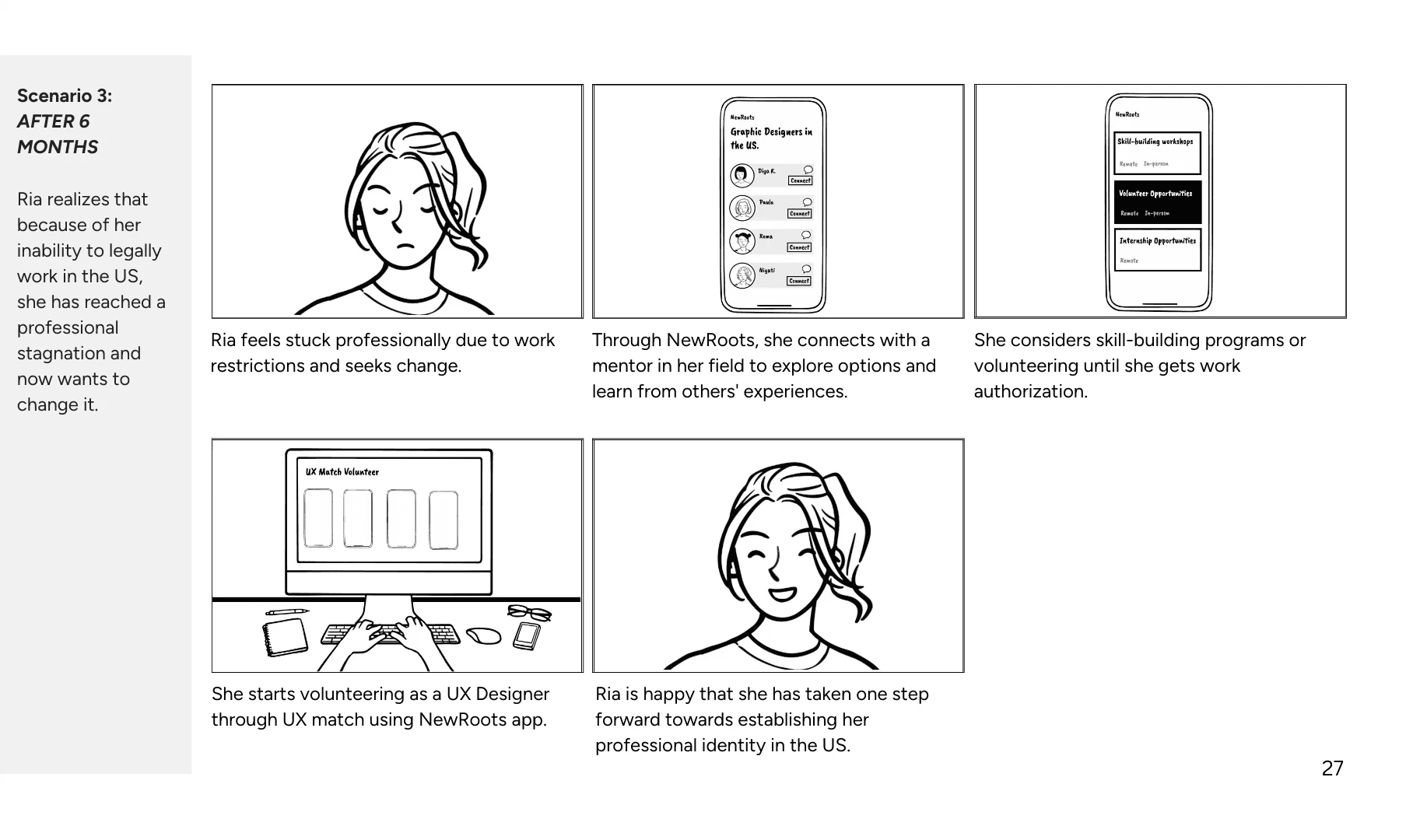
6 months after move
6 months after move
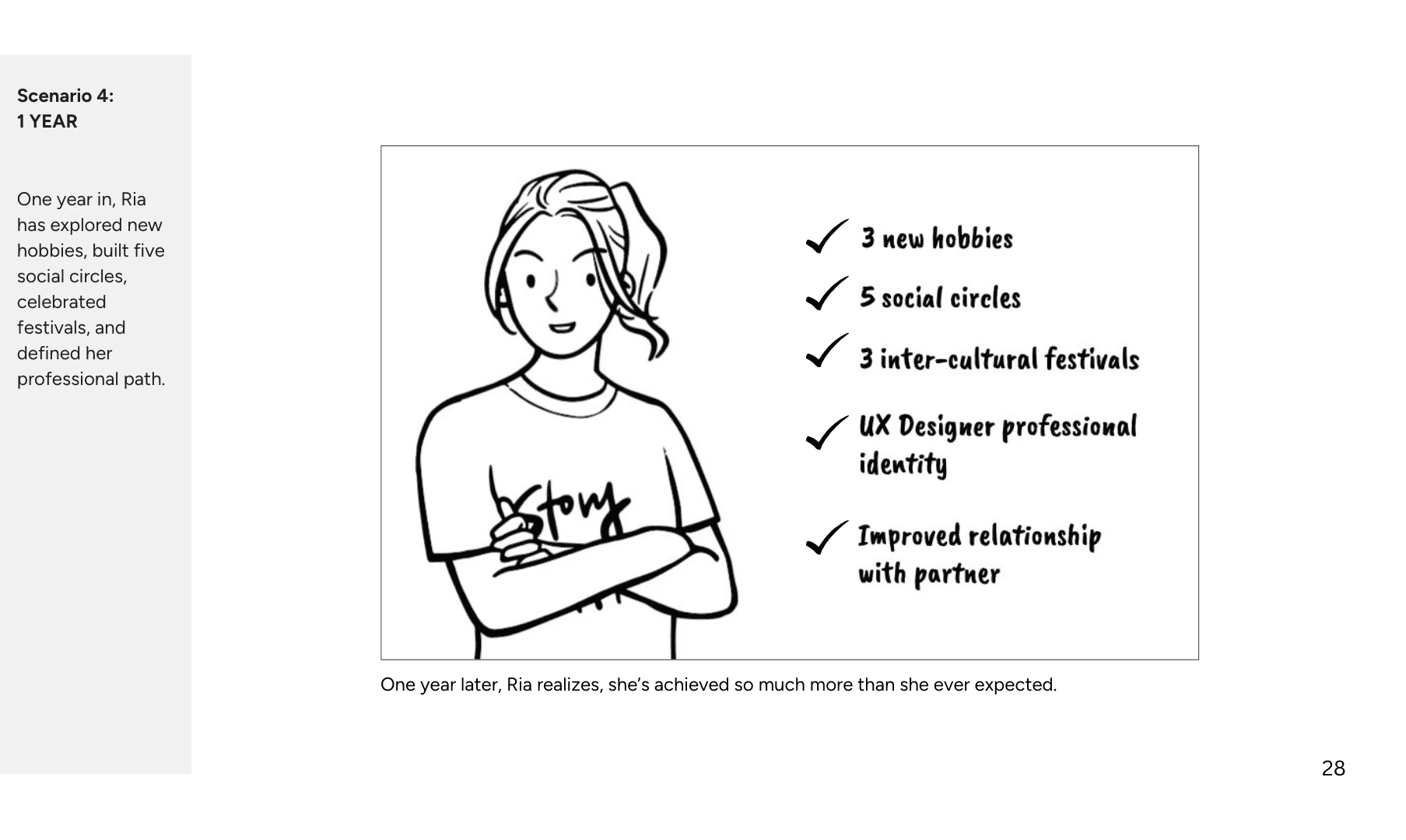
1 year after move
1 year after move
07 - VALIDATION
07 - VALIDATION
Did the ecosystem resonate beyond the research room?
Did the ecosystem resonate beyond the research room?
Concept testing and storyboard validation across nationalities, visa types, and relocation stages. Strong resonance suggested the framing, not just the features, was the differentiator.
Concept testing and storyboard validation across nationalities, visa types, and relocation stages. Strong resonance suggested the framing, not just the features, was the differentiator.
86%
86%
Adoption intent during concept and storyboard testing
Adoption intent during concept and storyboard testing
2x
2x
Increase in perceived support, validating emotionally-timed service interventions
Increase in perceived support, validating emotionally-timed service interventions
$2.5M
$2.5M
Projected Year 1 revenue via dual-channel B2B and B2C monetization
Projected Year 1 revenue via dual-channel B2B and B2C monetization
Full Process Documentation
Full Process Documentation
Want to see the complete research, methodology, and design process?
The thesis document covers the full arc: from research planning and co-design facilitation to ecosystem blueprinting and business model development.
Want to see the complete research, methodology, and design process?
The thesis document covers the full arc: from research planning and co-design facilitation to ecosystem blueprinting and business model development.
Read the Full Thesis
Read the Full Thesis

Ways that AI was used in this project
Ways that AI was used in this project
REFLECTION
REFLECTION
Empathy reveals the problem. Systems make it solvable. The most meaningful design work makes invisible labor visible.
Empathy reveals the problem. Systems make it solvable. The most meaningful design work makes invisible labor visible.
Open to new roles- Seattle & Remote
Looking for research and strategy roles where the insight
actually shapes what gets built, not just validates it after the fact.
Nitya Jois | Seattle WA
Open to new roles- Seattle & Remote
Looking for research and strategy roles where the insight actually shapes what gets built, not just validates it after the fact.
Nitya Jois | Seattle WA
Open to new roles- Seattle & Remote
Looking for research and strategy roles where the insight
actually shapes what gets built, not just validates it after the fact.
Nitya Jois | Seattle WA