
Case Study — Logistics & Supply Chain
Case Study — Logistics & Supply Chain
LoadBoard App
LoadBoard App
When users are bypassing your platform for WhatsApp groups, is that a UX problem, or a trust infrastructure gap?
When users are bypassing your platform for WhatsApp groups, is that a UX problem, or a trust infrastructure gap?
Role
Role
Product Design + UX Research
Product Design + UX Research
Duration
Duration
6 months
6 months
Industry
Industry
Logistics/B2b
Logistics/B2b
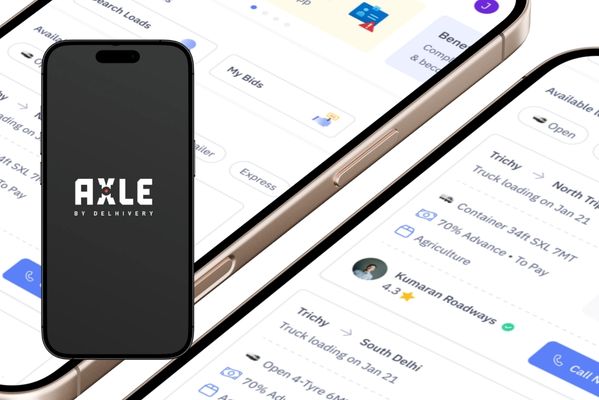
Loadboard App
Loadboard App
2x
2x
Increase in recommendation intent post-testing.
Increase in recommendation intent post-testing.
8
8
Moderated usability tests, conducted remotely during COVID
Moderated usability tests, conducted remotely during COVID
3
3
Distinct role architectures designed from a single platform
Distinct role architectures designed from a single platform
6
6
Competitor platforms audited across local and global markets
Competitor platforms audited across local and global markets
⚠ NDA: Final UI screens are confidential. This case study focuses on decision-making, system design, and interaction strategy.
⚠ NDA: Final UI screens are confidential. This case study focuses on decision-making, system design, and interaction strategy.
01 - CONTEXT
01 - CONTEXT
The users weren't misbehaving.
They were compensating.
The users weren't misbehaving.
They were compensating.
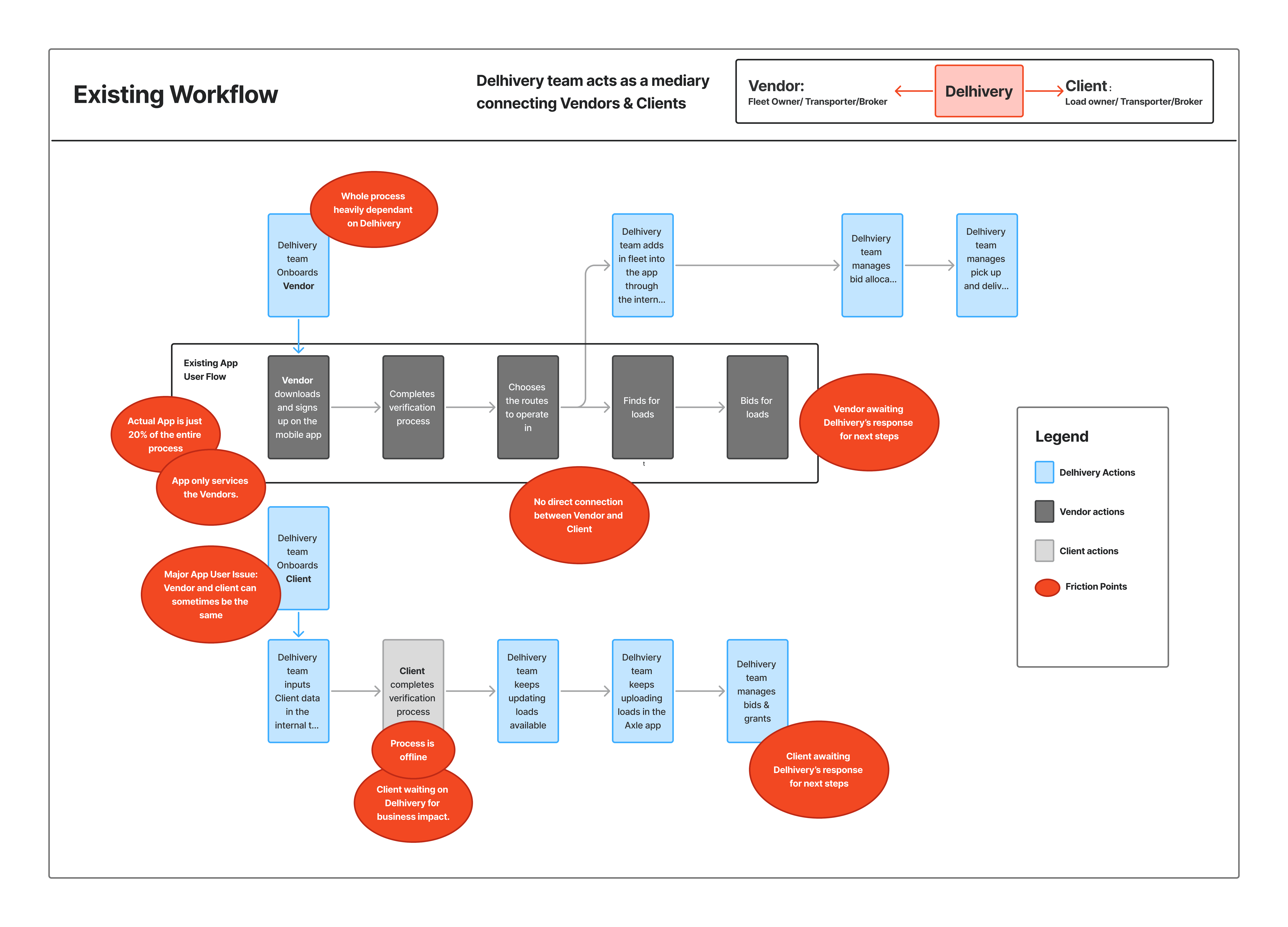
Shippers, brokers, & fleet owners on Delhivery's LoadBoard were routing critical transactions through WhatsApp groups, not because the app was broken, but because it didn't give them enough control to trust it. Platform mediation had created a system that worked for operations teams, not for the people doing the actual work.
The product wasn't missing features. It was missing user agency. A system meant to scale was running on trust gaps.
Shippers, brokers, & fleet owners on Delhivery's LoadBoard were routing critical transactions through WhatsApp groups, not because the app was broken, but because it didn't give them enough control to trust it. Platform mediation had created a system that worked for operations teams, not for the people doing the actual work.
The product wasn't missing features. It was missing user agency. A system meant to scale was running on trust gaps.
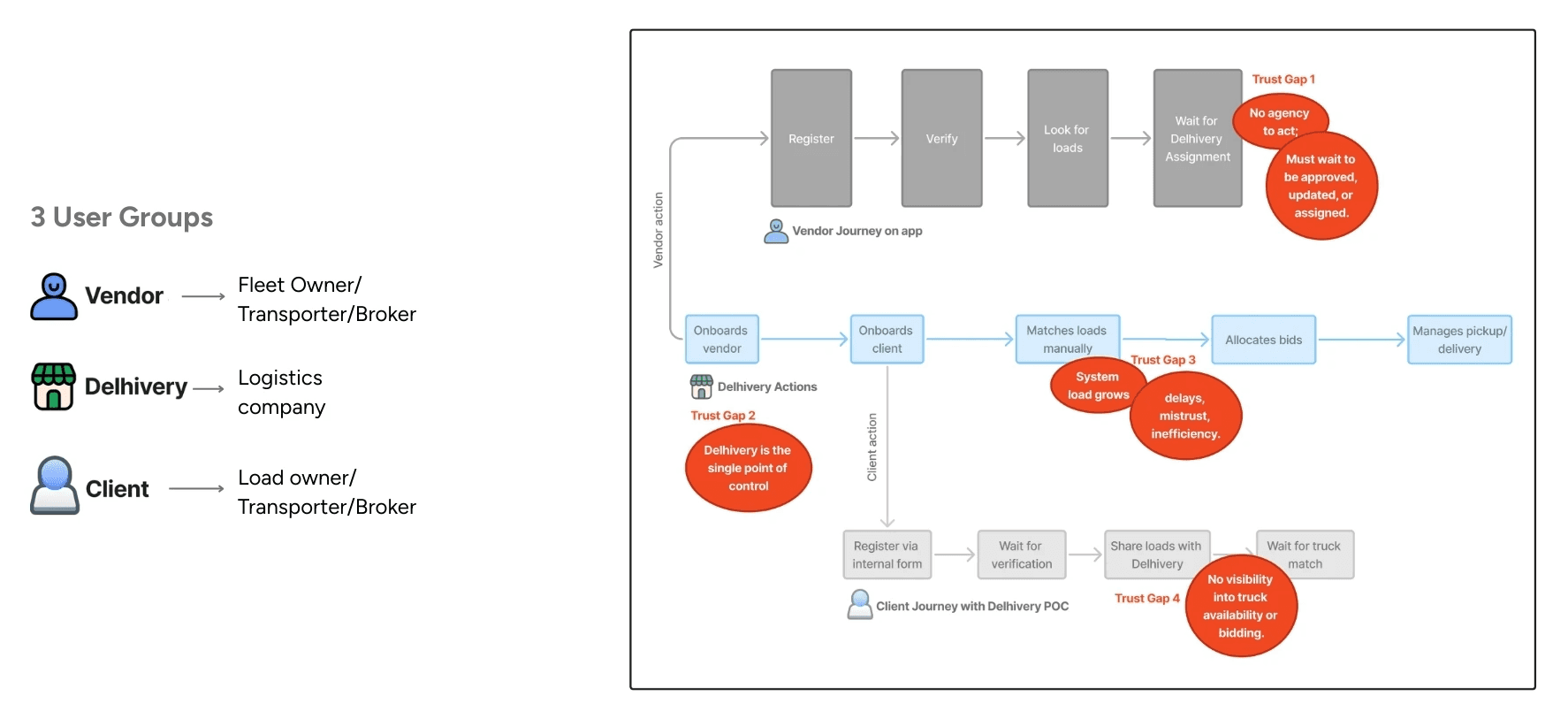
Vendor and Client Journey Maps with Delhivery Intervention
Vendor and Client Journey Maps with Delhivery Intervention
02 - RESEARCH
02 - RESEARCH
How do you research a system people have already abandoned?
How do you research a system people have already abandoned?
Five months of discovery across;
Stakeholder interviews,
A full UX audit,
Competitor analysis across 6 platforms (local and global), and
8 moderated remote usability tests, conducted via Zoom during COVID, with Tier II city users who had limited English proficiency.
Constraints shaped the method. Localization validation became as important as task completion. We weren't just testing if users could complete flows, we were testing whether the language, logic, and interaction patterns matched how these users already thought about freight.
Five months of discovery across;
Stakeholder interviews,
A full UX audit,
Competitor analysis across 6 platforms (local and global), and
8 moderated remote usability tests, conducted via Zoom during COVID, with Tier II city users who had limited English proficiency.
Constraints shaped the method. Localization validation became as important as task completion. We weren't just testing if users could complete flows, we were testing whether the language, logic, and interaction patterns matched how these users already thought about freight.
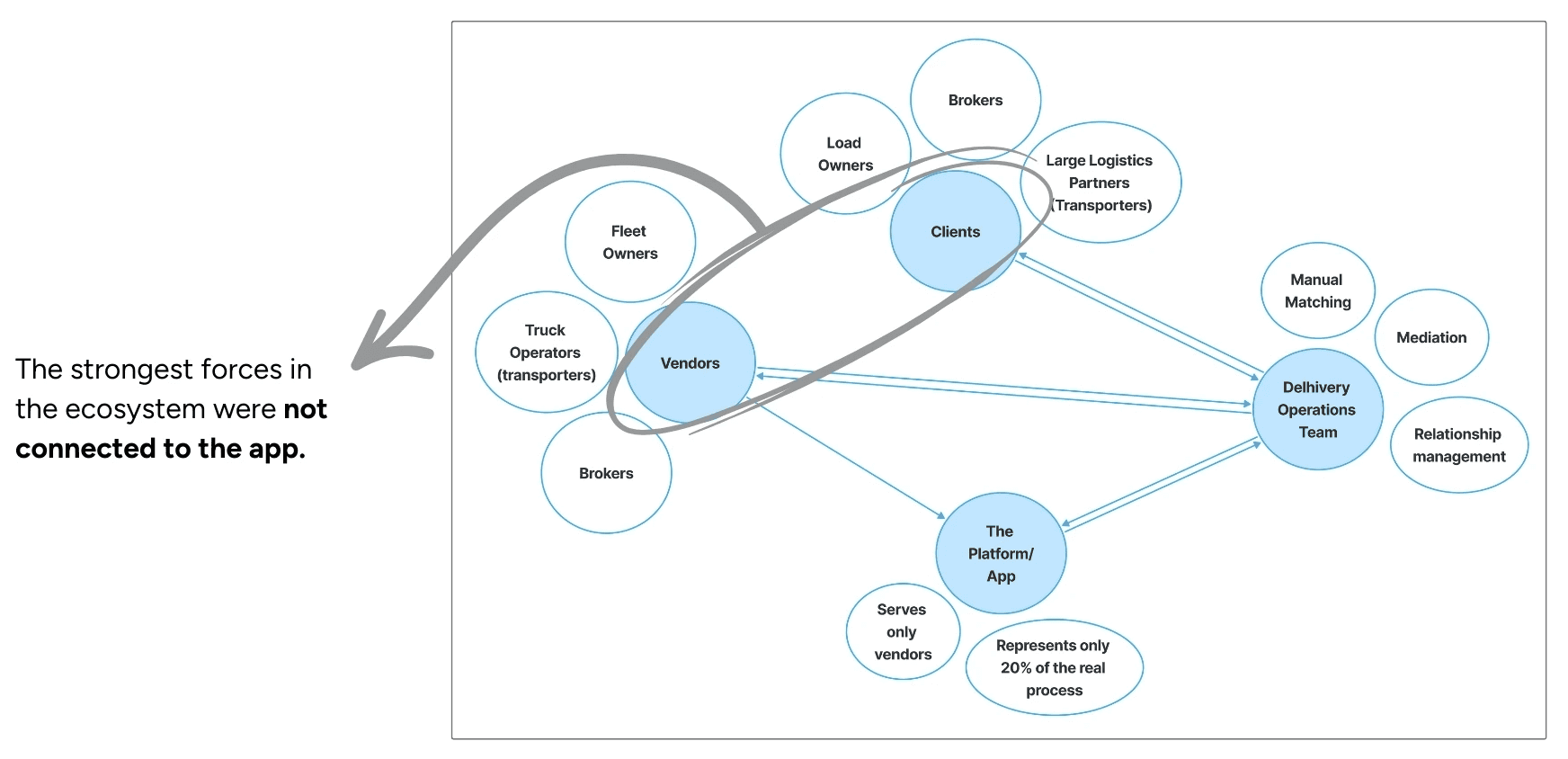
Ecosystem Map
Ecosystem Map
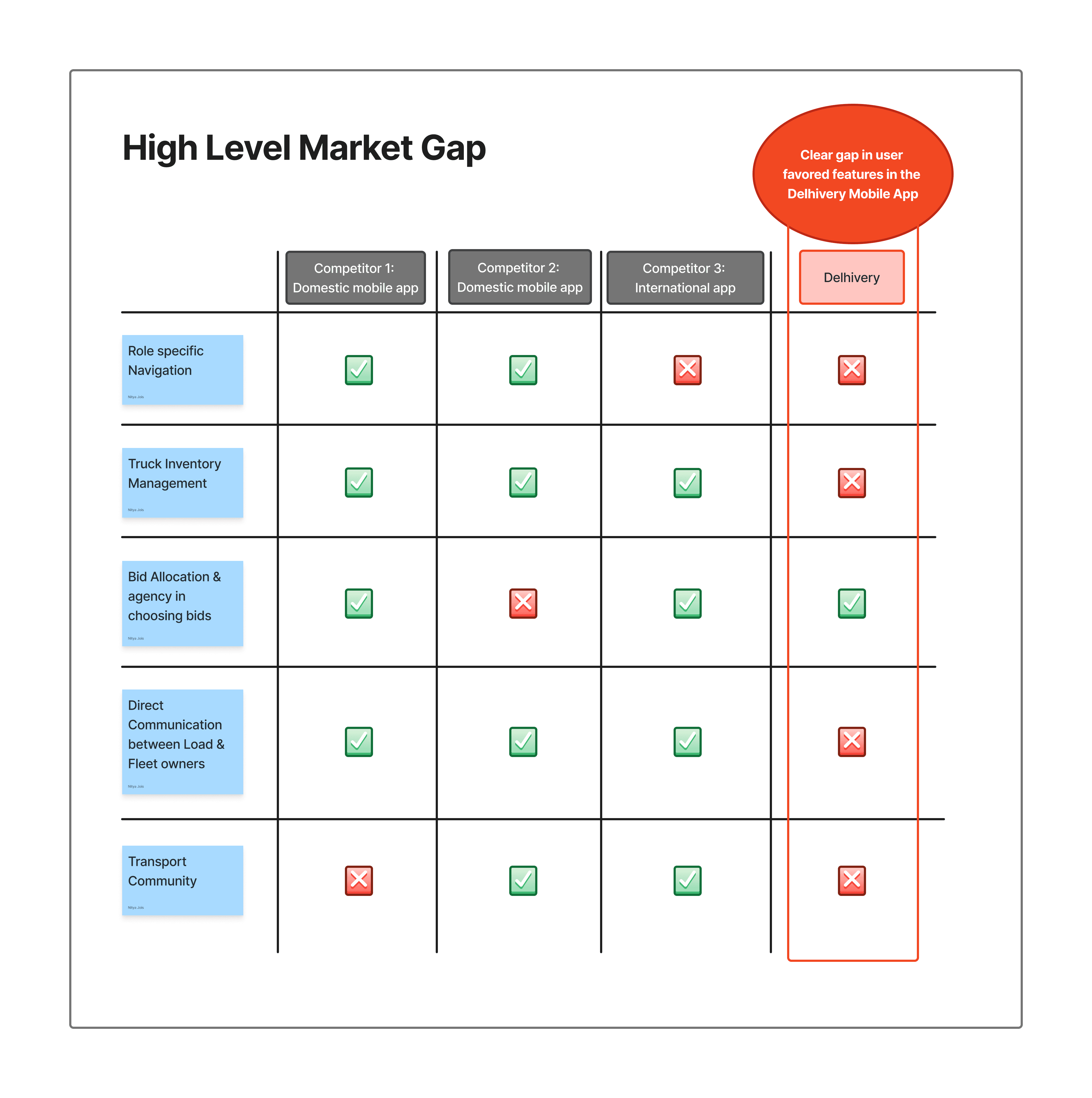
Competitor Analysis
Competitor Analysis
UX Audit
UX Audit
03 - INSIGHTS
03 - INSIGHTS
What were users actually telling us?
What were users actually telling us?
01
01
Trust and habit beat features
Trust and habit beat features
Competing platforms weren't winning on functionality, they were winning on familiarity. Users returned to what felt predictable, even when it was less capable.
Competing platforms weren't winning on functionality, they were winning on familiarity. Users returned to what felt predictable, even when it was less capable.
02
02
Roles overlap. Workflows diverge.
Roles overlap. Workflows diverge.
Shippers, brokers, and fleet owners share a platform but have fundamentally different task motivations. A one-size flow created invisible friction for all three.
Shippers, brokers, and fleet owners share a platform but have fundamentally different task motivations. A one-size flow created invisible friction for all three.
03
03
Centralized control erodes adoption.
Centralized control erodes adoption.
Every friction point traced back to the same root: users couldn't act without routing through platform permission. Control was the bottleneck, not capability.
Every friction point traced back to the same root: users couldn't act without routing through platform permission. Control was the bottleneck, not capability.
04 - STRATEGY
04 - STRATEGY
So what actually changed?
So what actually changed?
From
From
Admin-centric, platform-mediated architecture
Admin-centric, platform-mediated architecture
To
To
User-driven posting, bidding, and direct load matching, no platform gatekeeper required.
User-driven posting, bidding, and direct load matching, no platform gatekeeper required.
From
From
Static, role-agnostic onboarding
Static, role-agnostic onboarding
To
To
Dynamic role selection that shaped navigation, task visibility, and homepage logic throughout the session
Dynamic role selection that shaped navigation, task visibility, and homepage logic throughout the session
From
From
Inventory as a backend record, invisible to users
Inventory as a backend record, invisible to users
To
To
"Add Truck" as a user-owned action and trust anchor, the feature that doubled recommendation intent.
"Add Truck" as a user-owned action and trust anchor, the feature that doubled recommendation intent.
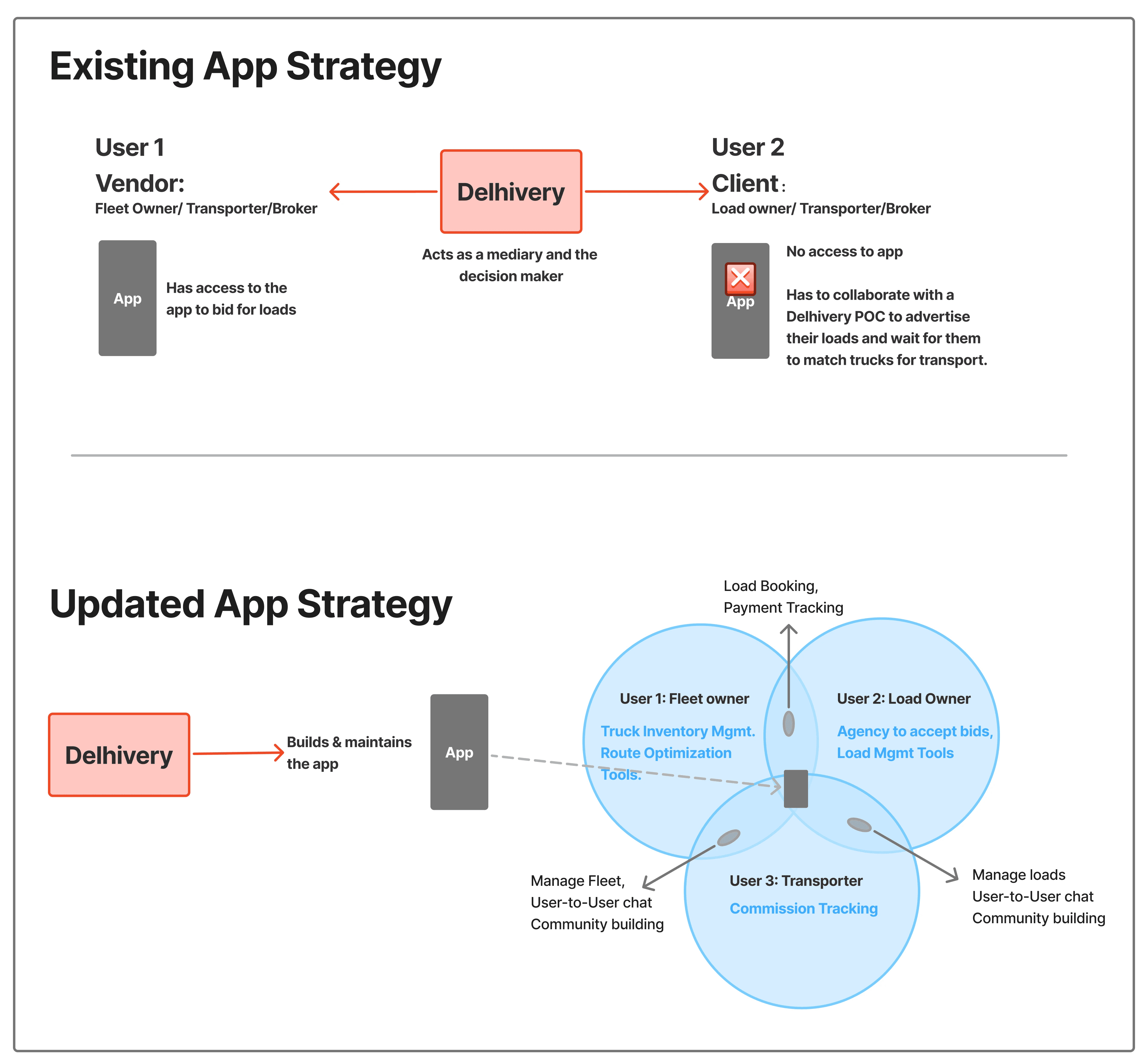
Change in App Strategy
Change in App Strategy
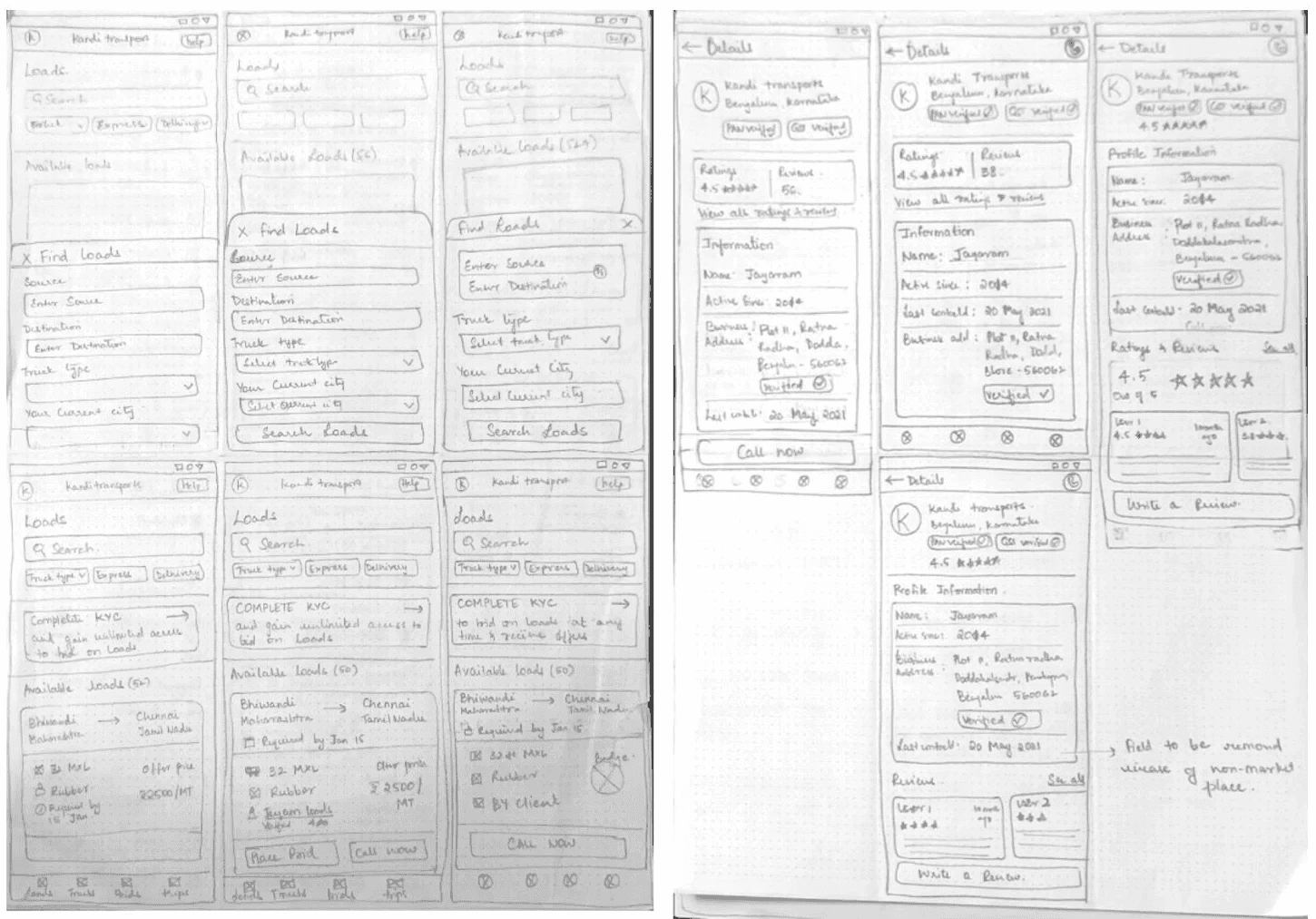
Crazy 8 / Workshop sketches
Crazy 8 / Workshop sketches
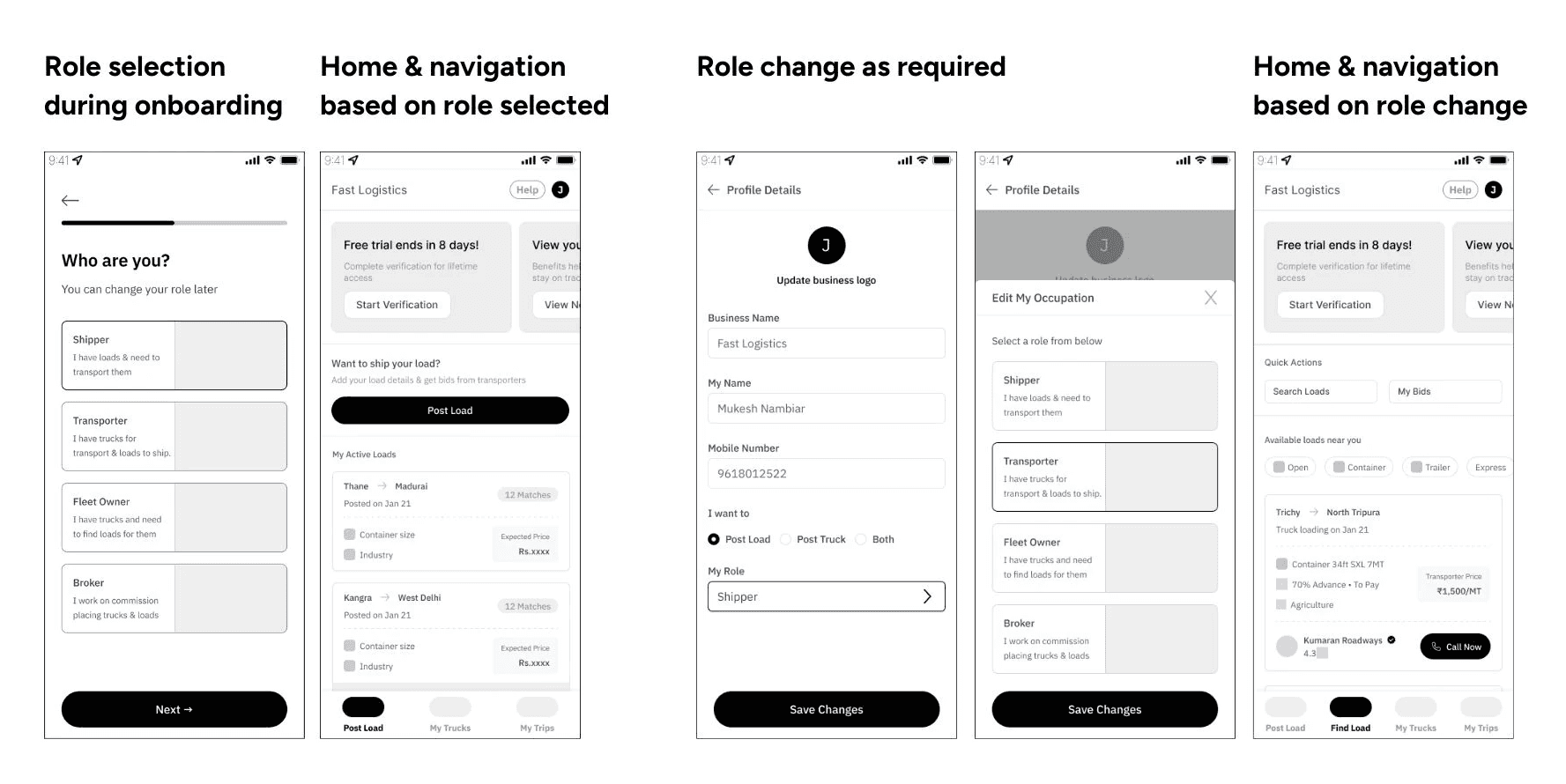
Role-based entry & adaptive navigation flow
Role-based entry & adaptive navigation flow
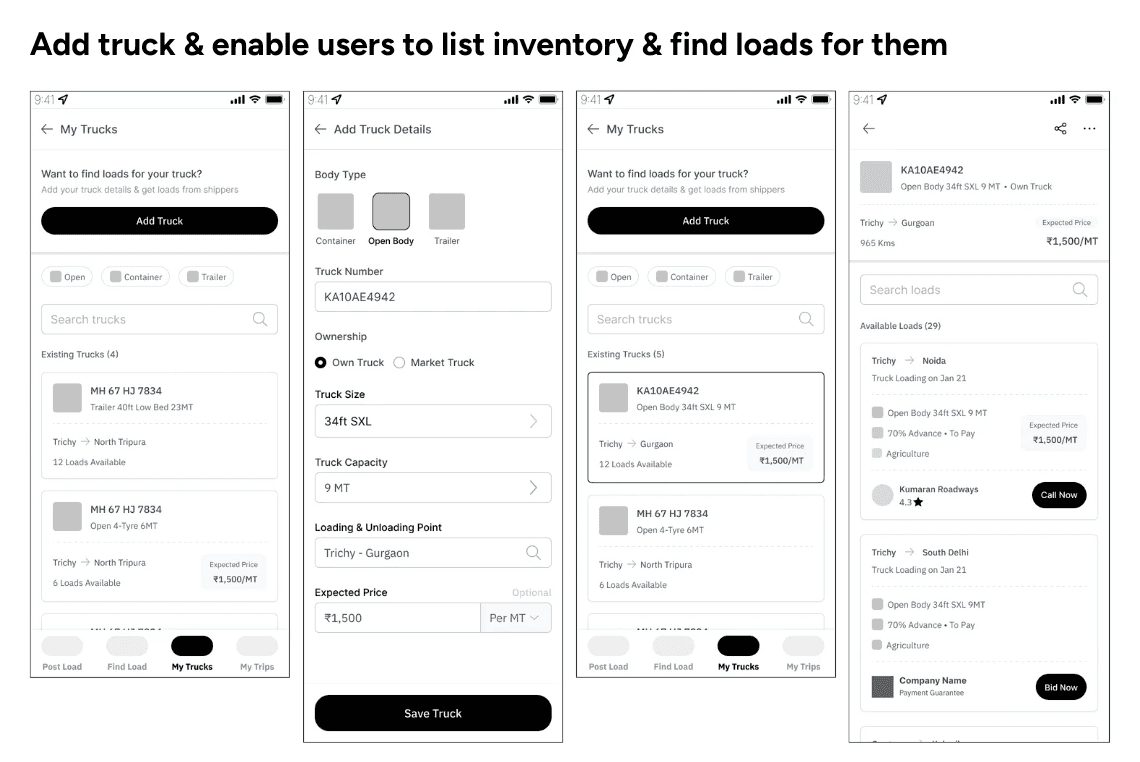
"Add truck" as a user-owned action and trust anchor
"Add truck" as a user-owned action and trust anchor
05 - VALIDATION
05 - VALIDATION
Did the architecture hold up under testing?
Did the architecture hold up under testing?
Eight think-aloud tests.
Users who completed the Add Truck flow reported 2× stated intent to recommend the platform.
Task completion improved across flows that previously required offline workarounds.
Regionalized language and familiar interaction patterns measurably reduced onboarding fatigue.
The product was deprioritized before release due to shifting business priorities. But the research framework was institutionalized, teams adopted earlier research kickoffs and tighter stakeholder alignment in subsequent cycles.
Eight think-aloud tests.
Users who completed the Add Truck flow reported 2× stated intent to recommend the platform.
Task completion improved across flows that previously required offline workarounds.
Regionalized language and familiar interaction patterns measurably reduced onboarding fatigue.
The product was deprioritized before release due to shifting business priorities. But the research framework was institutionalized, teams adopted earlier research kickoffs and tighter stakeholder alignment in subsequent cycles.
2x
2x
Recommendation intent after Add Truck prototype testing
Recommendation intent after Add Truck prototype testing
Task completion across flows that previously required WhatsApp or broker mediation
Task completion across flows that previously required WhatsApp or broker mediation
Research-first practices institutionalized across future product cycles at Delhivery
Research-first practices institutionalized across future product cycles at Delhivery
REFLECTION
REFLECTION
"Good logistics UX isn't about streamlining flows. It's about redistributing control to the people who bear the most operational risk."
"Good logistics UX isn't about streamlining flows. It's about redistributing control to the people who bear the most operational risk."
Open to new roles- Seattle & Remote
Looking for research and strategy roles where the insight
actually shapes what gets built, not just validates it after the fact.
Nitya Jois | Seattle WA
Open to new roles- Seattle & Remote
Looking for research and strategy roles where the insight actually shapes what gets built, not just validates it after the fact.
Nitya Jois | Seattle WA
Open to new roles- Seattle & Remote
Looking for research and strategy roles where the insight
actually shapes what gets built, not just validates it after the fact.
Nitya Jois | Seattle WA